Introduction and Overview
In what is already being hailed as a defining milestone for multilateral climate diplomacy, the United Nations Climate Summit has concluded with a sweeping international accord aimed at drastically cutting planetary carbon emissions. The breakthrough followed around-the-clock plenary deliberations and intense bilateral bargaining among delegations representing nearly two hundred nations. Negotiators worked tirelessly through final marathon sessions to produce an ambitious framework designed to fundamentally shift the trajectory of worldwide industrial output, energy generation, and environmental stewardship. The agreement arrives at a critical juncture in human history, as planetary warming benchmarks threaten to breach catastrophic tipping points and ecological shocks ripple across both developed and developing economies.
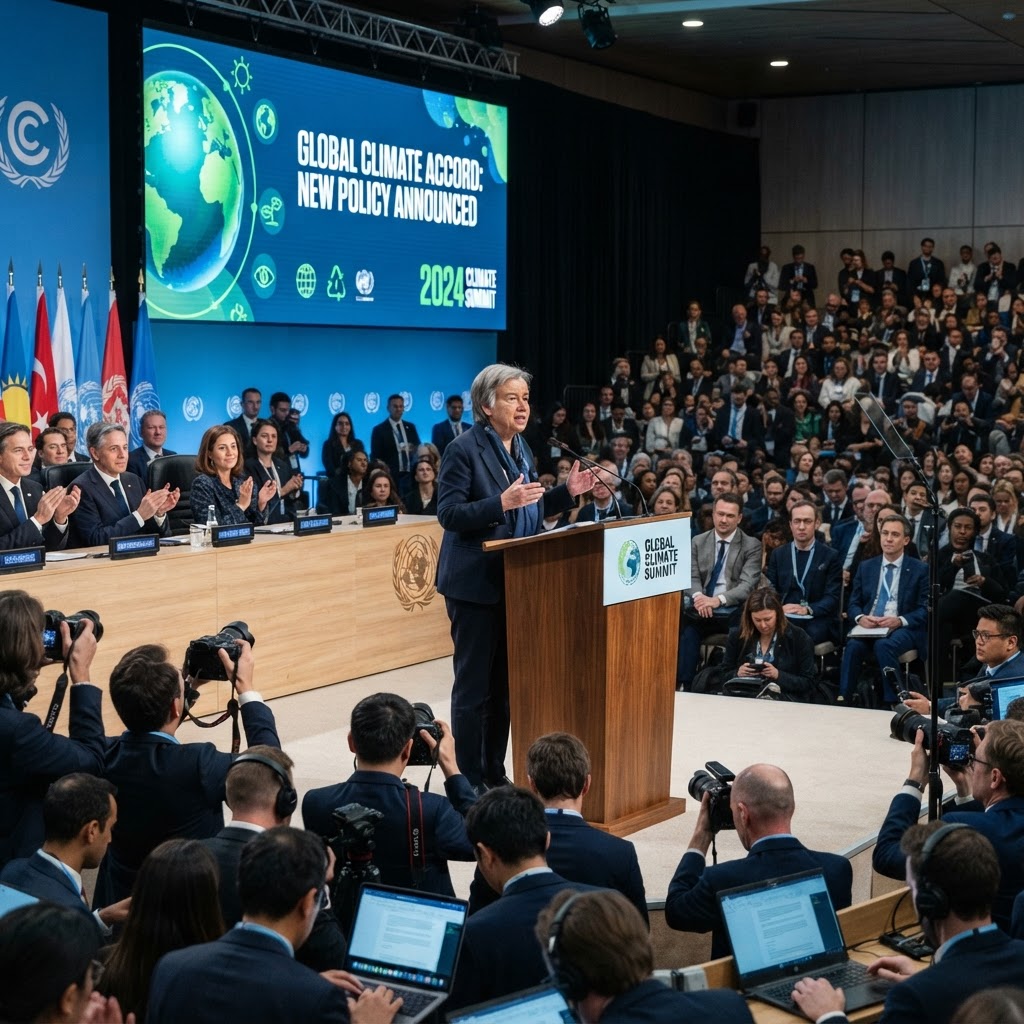
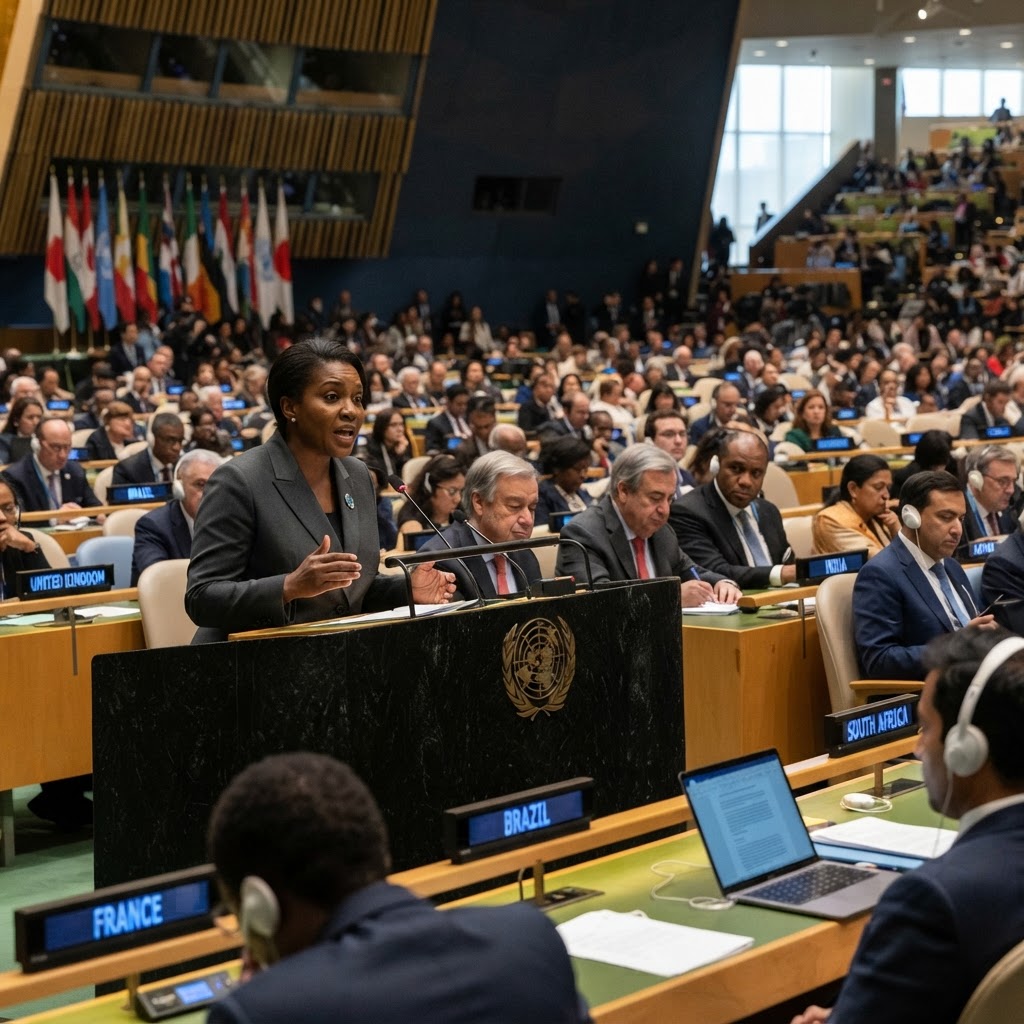
The core objective of the new multilateral compact is to accelerate deep emissions reductions across all major sectors of the modern economy, replacing sluggish decadal targets with immediate, binding benchmarks. Delegates emerged from closed-door conference halls in the early hours of the morning to announce that participating governments had formally endorsed an aggressive roadmap targeting an unprecedented reduction in carbon intensity by the middle of this century. By formalizing accelerated transition timelines and overhauling oversight provisions, the summit established a newly enforceable paradigm that bridges long-standing divides between industrialized powers and emerging nations. The atmosphere within the plenary hall shifted from high anxiety to exhausted jubilation as the summit leadership gaveled the compromise into formal adoption.
This development carries immense global importance because voluntary mitigation commitments over the past several decades have repeatedly fallen short of curtailing runaway greenhouse gas concentrations. Without unified, coordinated, and well-funded global intervention, catastrophic meteorological extremes, agricultural shocks, and coastal inundation threaten to cause systemic disruption to human societies. The newly finalized text establishes a common institutional architecture for measuring, verifying, and reducing carbon emissions, removing lingering ambiguities that have paralyzed previous summits. By addressing contentious questions surrounding economic equity, technical capacity transfer, and baseline accounting rules, the agreement charts a comprehensive course toward planetary stabilization.
Advertisement

Furthermore, the accord addresses not only long-term aspirations for mid-century industrial transformation, but also enacts actionable mandates for the immediate decade ahead. Negotiators spent considerable political capital formulating precise sectoral roadmaps for energy utilities, transport networks, heavy manufacturing, and natural carbon sink preservation. In doing so, the summit leadership aimed to satisfy the urgent demands of climate scientists, civil society coalitions, and vulnerable coastal states who warned that another incremental, non-binding outcome would effectively doom the goal of preserving a stable climate. The resulting framework represents the most concerted international attempt yet to reconcile sovereign economic interests with the uncompromising demands of planetary physics.
Background and Context
The journey leading to this landmark summit outcome is rooted in more than three decades of complex, frequently frustrated multilateral climate negotiations. Since the historic United Nations Earth Summit in Rio de Janeiro in 1992, the global community has struggled to reconcile national economic ambitions with ecological preservation. Early attempts at structured multilateral action, most notably the 1997 Kyoto Protocol, recognized differentiated historical contributions to cumulative emissions but ultimately suffered from key structural limitations, including the exclusion of major developing powers from binding cuts and the subsequent withdrawal or non-ratification by critical industrialized states. Consequently, global aggregate emissions continued their upward trajectory virtually uninterrupted.
The diplomatic landscape underwent an essential strategic reset at the 2015 Paris Climate Conference, which established an inclusive bottom-up architecture under the Paris Agreement. By requiring all member nations—both developed and developing—to submit national climate pledges, Paris established a universal foundation for global cooperation. However, the fundamental weakness of that structure remained its reliance on voluntary, non-punitive Nationally Determined Contributions that, when aggregated, left the world on track for warming well above safe ecological thresholds. Subsequent sessions, including negotiations in Glasgow, Sharm el-Sheikh, and Dubai, attempted to establish operational guidelines and build momentum for a phased shift away from unabated fossil fuels, yet contentious divisions regarding equitable responsibility and climate financing continually hampered structural progress.
Complicating these diplomatic efforts has been the relentless progression of climate impacts documented by international scientific bodies. Assessments published by the World Meteorological Organization and the Intergovernmental Panel on Climate Change have underscored an accelerating climate crisis, with recent years registering as the hottest in recorded human history. Atmospheric carbon concentrations have continued to break historical records year after year, driving widespread loss of polar ice sheets, intensifying mega-droughts, and escalating maritime marine heatwaves. Scientists have repeatedly warned that the window to avoid irreversible planetary tipping points is closing rapidly, placing an immense burden on multilateral institutions to deliver structural transformation rather than diplomatic rhetoric.
The geopolitical backdrop heading into this summit added exceptional pressure to the negotiating environment. Escalating regional conflicts, sovereign debt crises across the Global South, and volatile energy markets following recent international disruptions threatened to divert political capital away from international green cooperation. Several resource-rich developing economies voiced deep skepticism regarding unilateral decarbonization mandates that appeared to foreclose their legitimate industrial development prospects without robust, guaranteed compensatory financing. The delegates gathered at the summit venue were therefore charged not only with drafting an ambitious environmental agreement, but also with repairing frayed trust across the international economic system.
Key Developments
The finalized agreement, negotiated through grueling overtime sessions that pushed the summit days past its scheduled conclusion, introduces binding commitments designed to fundamentally reshape the global energy and industrial sectors. At the center of the accord is a strict, verifiable target for emissions abatement that requires signatory nations to halt emissions growth by the end of this decade and systematically reduce aggregate industrial greenhouse pollution by sixty percent from 2019 levels by 2035. Unlike previous diplomatic statements that relied on vague aspirational language, this framework mandates that every participating nation submit updated national action plans with specific, auditable milestones every three years.
A second central pillar of the pact is an overhaul of international climate finance and loss-mitigation facilities. Developed nations, long held responsible for the overwhelming majority of historical emissions, have formally agreed to a legally robust, capitalized financing vehicle designed to disburse substantial grant-based capital to developing economies. This funding mechanism will facilitate rapid grid modernization, subsidize clean infrastructure deployment, and compensate vulnerable territories experiencing severe climate-induced infrastructure damage. The final compromise successfully neutralized a major sticking point that had deadlocked talks for over a week, balancing transparency requirements for recipient governments against predictable funding guarantees from wealthy economies.
The summit also instituted a globally recognized, standardized framework for corporate and state-level greenhouse gas accounting, effectively eliminating persistent loopholes associated with voluntary offset markets. The newly adopted monitoring guidelines require the standardized tracking of short-lived pollutants, such as methane and hydrofluorocarbons, alongside traditional carbon dioxide tracking. By incorporating rigorous satellite verification systems developed under international scientific supervision, the agreement creates an objective, empirical monitoring system that leaves little room for creative corporate reporting or state obfuscation.
The comprehensive treaty establishes several mandatory sectoral work programs and enforcement mechanisms, which include:
- Phased Reductions in Heavy Industry: Clear operational phase-outs and emission-intensity caps for global steelmaking, cement manufacturing, chemical processing, and international commercial shipping operations.
- Methane and Short-Lived Pollutant Elimination: A mandated 75 percent reduction in fugitive methane emissions from fossil fuel infrastructure, industrial pipelines, and major agricultural operations by 2030.
- Capitalized Loss and Damage Windows: Direct, pre-approved financial disbursement mechanisms designed to trigger immediately following extreme weather disasters in qualifying small island states and least-developed nations.
- Independent Compliance and Verification Panels: A multinational civilian-scientific oversight body empowered to publish annual compliance scorecards and trigger administrative reviews for non-performing signatories.
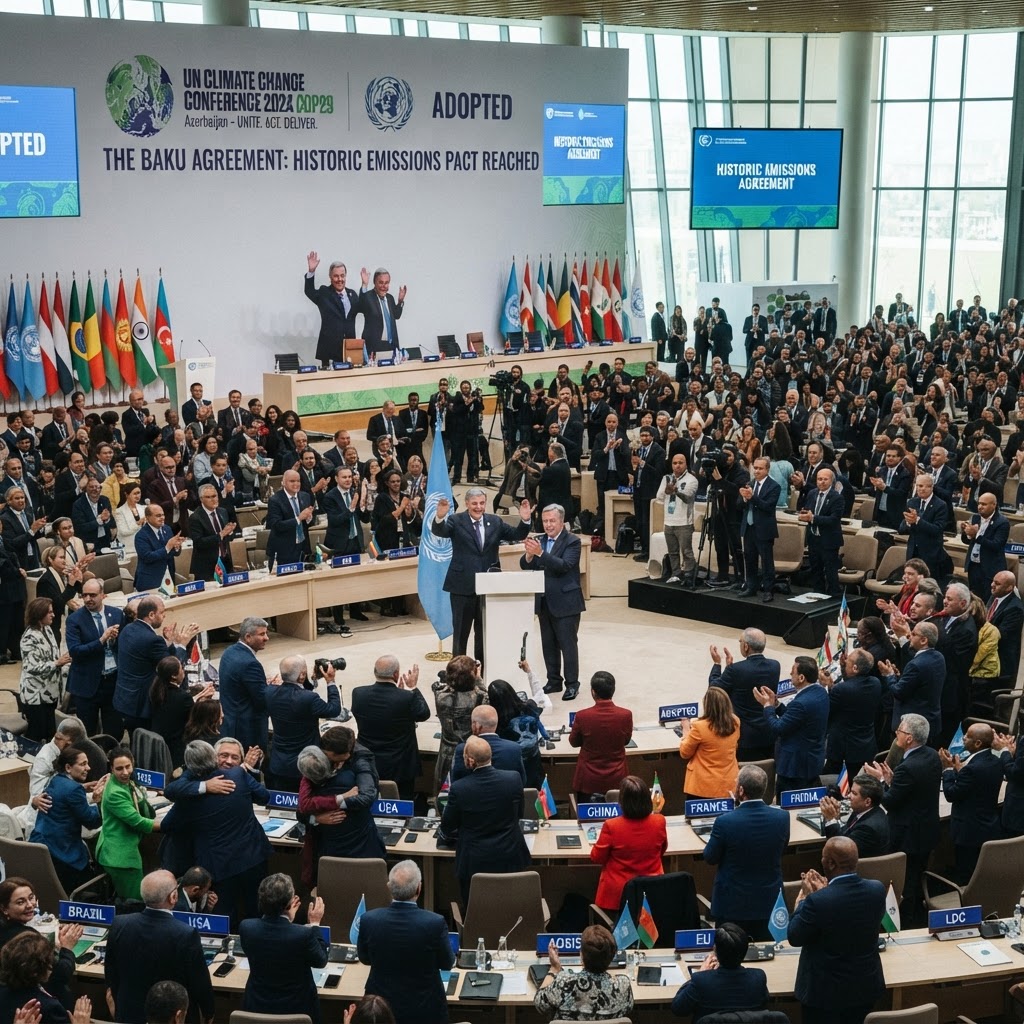
The formal passage of the treaty occurred amid intense emotional scenes inside the main plenary hall. Representatives of low-lying island nations and frontline developing states, whose very territorial survival depends upon rapid global mitigation, embraced colleagues across regional blocs after the final compromise text was accepted without formal objections. The summit president lowered the ceremonial gavel to thunderous applause, marking the end of a grueling negotiation cycle and the beginning of an equally demanding era of implementation.
Expert Analysis and Perspectives
Global policy specialists, climate scientists, and economic analysts have offered detailed evaluations of the newly minted treaty, presenting a spectrum of viewpoints ranging from hopeful optimism to cautionary skepticism. Many senior figures have praised the agreement for finally matching diplomatic ambitions with the empirical realities established by atmospheric sciences. They point to the newly integrated enforcement structures and specific sectoral targets as a fundamental departure from the vague, voluntary declarations that characterized previous UN climate gatherings over the past decade.
"What we have achieved in this summit is nothing less than a structural realignment of international climate governance. We have moved decisively past the era of voluntary promises into an era of verifiable, enforceable accountability that respects both planetary physics and economic justice."
This sentiment was underscored by international economic scholars who note that establishing uniform carbon accounting and clear mitigation schedules provides the long-term regulatory certainty that global capital markets have long demanded. For decades, private investors and sovereign wealth funds have hesitated to commit large volumes of capital to emergent clean technologies due to inconsistent regulatory signals and unpredictable subsidy regimes. By standardizing transition benchmarks across nearly two hundred jurisdictions, the treaty is anticipated to catalyze unprecedented waves of green capital deployment.
"Financial markets do not respond well to moral appeals; they respond to regulatory certainty, predictable risk structures, and market clarity. This treaty fundamentally redraws the boundary of commercial viability, effectively turning carbon-intensive production into a high-liability liability across the world."
However, despite the diplomatic triumph, prominent voices within civil society and research institutes have maintained a critical posture regarding the pace of deployment and the remaining concessions granted to resource extraction states. Several independent monitors have pointed out that despite tough language on emissions, the text contains carefully negotiated exemptions for transitional natural gas developments in certain regions, which could sustain dependence on fossil fuel infrastructure longer than atmospheric budgets safely permit. They stress that the ultimate measure of this treaty will be found not in the elegance of its diplomatic compromises, but in immediate physical changes to the global energy balance sheet.
"An agreement on paper is only as potent as the steel and solar panels put into the ground tomorrow. If governments fail to translate these high-level commitments into immediate, domestic structural reform, history will judge this summit as merely another masterclass in political rhetoric while the planet burns."
Legal analysts have also highlighted the unresolved legal challenges that will inevitably arise during domestic ratification and implementation across sovereign legal systems. In several constitutional democracies, treaty obligations that impact economic competitiveness or establish external reporting obligations will face intense domestic judicial scrutiny and legislative resistance. Experts caution that international compliance panels lack direct enforcement powers, meaning that non-compliance will rely predominantly on diplomatic pressure, financial penalties tied to concessional lending, and trade adjustments imposed by cooperative regional trading blocs.
Impact and Implications
The ramifications of this landmark climate treaty will be felt profoundly across the worldwide economic landscape, compelling an immediate restructuring of global industrial operations, capital flows, and labor markets. Multi-national corporations operating in energy production, automotive manufacturing, and aviation are already recalibrating their long-term capital expenditure budgets to align with the new carbon-intensity benchmarks. Enterprises that have delayed their decarbonization strategies will face escalating cost pressures, stranded asset risks, and increasingly stringent cross-border carbon border adjustment mechanisms applied by importing states.
Conversely, clean technology manufacturing and green infrastructure development are poised for unprecedented growth. Renewable energy developers, advanced battery storage manufacturers, grid engineering firms, and green hydrogen enterprises are anticipating massive infusions of private and public investment as nations race to fulfill their newly codified mitigation pledges. The agreement provides explicit frameworks to shield low-carbon technologies from unilateral protectionist measures, facilitating smoother global supply chain networks for critical minerals, photovoltaic equipment, and next-generation energy storage components.
The socioeconomic consequences for local communities and industrial workforces will be equally far-reaching. Regions heavily dependent on coal mining, fossil fuel extraction, and traditional internal combustion engine supply chains face severe structural disruptions unless comprehensive, well-funded just transition frameworks are rapidly executed. The treaty explicitly mandates that a fixed percentage of international mitigation funds must be directed toward community re-skilling, local infrastructure revitalization, and direct economic support for energy-dependent regions to prevent regional impoverishment and social friction.
At the grassroots municipal level, the agreement is set to spur substantial urban redesign initiatives across metropolitan regions worldwide. Signatory nations have pledged to support sustainable urban planning frameworks, which will affect everything from public transit electrification to municipal building efficiency mandates. Key societal changes and sectoral transitions will include:
- Acceleration of Clean Energy Grids: Rapid decommissioning of legacy coal and inefficient gas plants alongside expedited permitting for interconnected continental renewable energy grids.
- Transformation of Agricultural and Land-Use Practices: Implementation of restorative agricultural frameworks, strict limits on agricultural expansion into primary forests, and mandatory reductions in synthetic nitrogen fertilizers.
- Reorientation of Municipal Infrastructure: Broad deployment of high-efficiency district heating, zero-emission municipal transit fleets, and updated building codes requiring ultra-low embodied carbon in all commercial developments.
- Corporate Transparency Disclosures: Mandatory Scope 1, Scope 2, and Scope 3 greenhouse gas auditing for all publicly traded and large private enterprises operating in signatory nations.
Developing nations stand to witness profound transformations as dedicated funding facilities begin mobilizing capital for adaptation and decentralized energy deployment. For millions of people living in off-grid rural communities across Sub-Saharan Africa and South Asia, the international transfer of clean technology offers the promise of leapfrogging carbon-intensive industrialization entirely. By democratizing access to modern solar-plus-storage mini-grids and climate-resilient water infrastructure, the treaty has the potential to align essential poverty eradication efforts with comprehensive ecological sustainability.
Reactions from the Diaspora Community
Around the globe, diaspora communities have responded to the news with an intricate combination of relief, deep emotional catharsis, and continuing civic vigilance. For millions of individuals living far from their ancestral homes, the devastating impacts of global climate change are deeply personal, often experienced through terrifying reports of typhoons, recurring droughts, and coastal erosion threatening family members and cultural heritage in homeland regions. From London and Paris to New York and Toronto, diaspora organizations mobilized significant advocacy efforts throughout the duration of the summit to ensure the voices of vulnerable homelands were heard.
Pacific Islander and Caribbean diaspora groups, whose low-lying ancestral island homes face literal existential peril from rising sea levels, greeted the adoption of aggressive emissions curbs and formal loss-and-damage mechanisms with immense pride and solemnity. Cultural associations held community forums and solidarity vigils in major global hubs to celebrate the diplomatic achievements secured by their homeland negotiators. At the same time, community leaders emphasized that paper agreements cannot restore submerged coastal villages or reverse the destruction of coral reef ecosystems that have anchored their ancestral culture for millennia.