Introduction and Overview
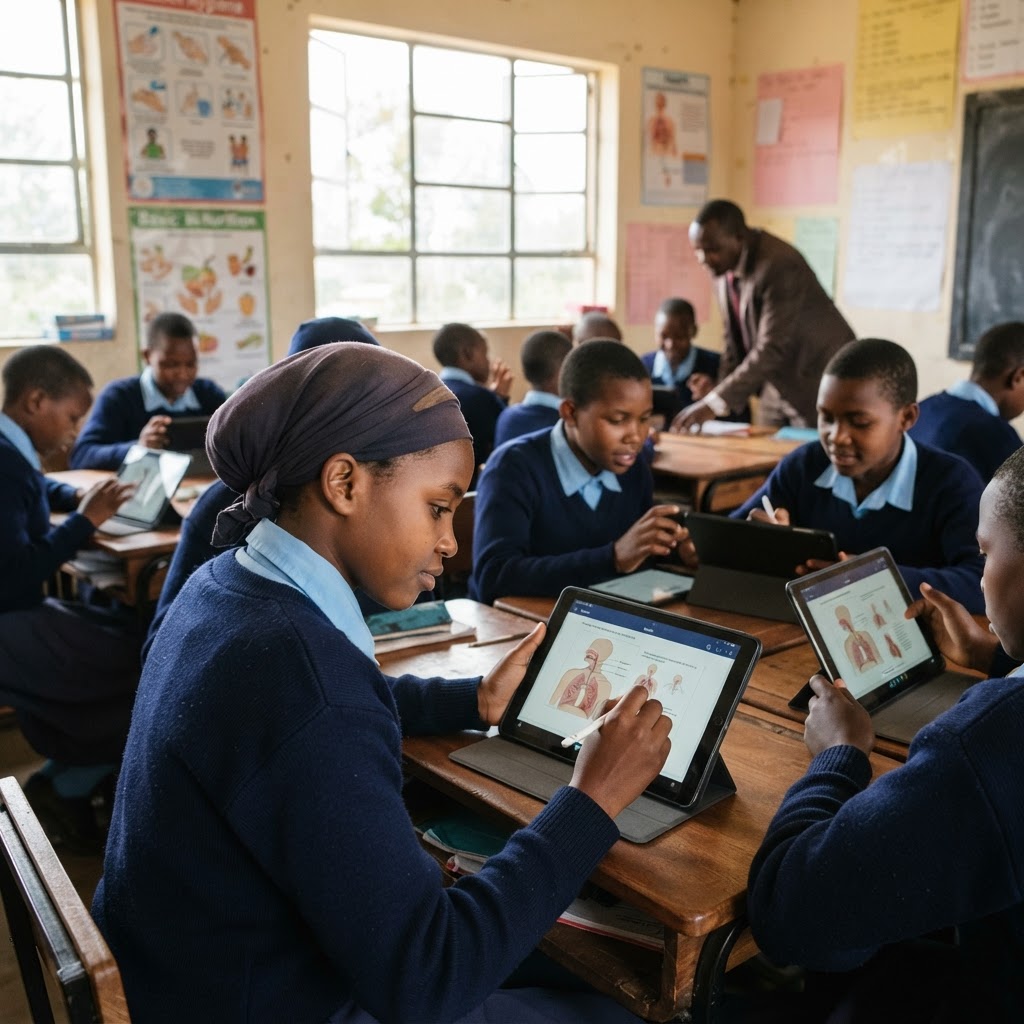
In what policy analysts, pediatricians, and educational economists are hailing as a transformative turning point for contemporary public pedagogy, a nationwide digital learning initiative has officially surpassed the milestone of enrolling one million students. Across historically neglected urban neighborhoods, sprawling rural agricultural regions, and remote Indigenous reservations, children who were previously cut off from basic information architecture are powering on dedicated learning tablets and entering modern virtual classrooms. This numeric benchmark reflects far more than an operational victory for logistics coordinators and regional school boards. It signals a profound structural shift in how society delivers instruction, fosters civic equity, and addresses the root socioeconomic determinants of community health and generational wellness.
For decades, the educational landscape has been fractured by a stubborn digital divide that mirrors broader economic stratification. While affluent school districts transitioned effortlessly to immersive software platforms, one-to-one computing ecosystems, and algorithmic tutoring platforms, under-resourced schools remained chained to worn, outdated textbooks, understaffed facilities, and unreliable cellular hotspots. By delivering ruggedized interactive tablets, subsidized multi-carrier cellular connectivity, and culturally responsive learning software, this initiative directly challenges the systemic inertia that has kept disadvantaged children on the periphery of the contemporary knowledge economy.
Crucially, the ripple effects of reaching one million young learners extend deep into the realm of public health and developmental wellness. Modern scientific research demonstrates that educational attainment functions as a primary social determinant of health, shaping cardiovascular outcomes, cognitive development, mental health resilience, and life expectancy across populations (SV Suiter, 2023). When an isolated child gains the capacity to learn continuously, communicate safely with educators, and access verified health literacy materials, the acute neurobiological stressors associated with systemic poverty, social alienation, and chronic educational failure begin to diminish. Digital equity has transformed from an isolated technical policy debate into an urgent preventative healthcare priority.
Advertisement

The program has reached classrooms from the rolling hills of the rural South to forgotten mountain hollows in Appalachia, and across densely populated, low-income urban enclaves on both coasts. Stakeholders emphasize that crossing this numeric milestone is merely the baseline of a permanent paradigm shift. By systematically equipping children with the tools needed to navigate twenty-first-century life, organizers and public officials have laid the foundation for an educational safety net capable of breaking multi-generational cycles of poverty, poor health outcomes, and digital disenfranchisement.
Furthermore, this milestone proves that public-private partnerships can move beyond performative philanthropy to achieve structural scale. Rather than relying on erratic equipment donations that leave districts burdened with obsolete hardware, the initiative was built upon sustainable procurement frameworks, ongoing technical maintenance, and active educator training. By treating technological access as a fundamental civic utility rather than a consumer privilege, the initiative has reset national expectations for what the public school system owes to every enrolled child, regardless of postal code or socioeconomic heritage.
Background and Context
The origins of the modern digital divide lie in decades of uneven telecommunications investments and structurally unequal school finance systems. Historically, commercial telecommunications infrastructure prioritized affluent suburban developments and corporate business parks, leaving low-income urban cores and rural farming communities severely under-connected. When digital platforms began replacing printed workbooks and physical library encyclopedias in the early 2000s, this systemic disparity shifted from an inconvenience into a catastrophic educational crisis, quietly penalizing students whose households could not absorb exorbitant hardware costs and ongoing broadband subscription fees.
The emergency shift toward remote instruction during the height of the COVID-19 pandemic brought these preexisting fractures into harsh relief. Millions of children across the country were suddenly marooned on the wrong side of the screen, forced to sit in fast-food restaurant parking lots to access municipal Wi-Fi or share a single cellular smartphone screen among three siblings to complete complex assignments. Independent educational equity research highlighted that nearly one in five students from under-resourced backgrounds possessed access to only a single shared device or lacked consistent broadband altogether (EdTrust-West). This homework gap transformed everyday learning into an insurmountable barrier for vulnerable households.
Rural communities faced uniquely punishing circumstances due to geographical isolation and low population density. In remote school systems across states like Texas, Wyoming, and Alabama, entire counties often had zero residential fiber options, leaving students reliant on sluggish, weather-sensitive satellite links or basic cellular signals (ERIC ED588911). Rural educators frequently found themselves printing reams of paper packets or driving school buses equipped with temporary Wi-Fi transmitters into vacant church parking lots so students could download homework assignments. These makeshift measures laid bare the total inadequacy of the status quo.
In response to this mounting emergency, a consortium of federal agencies, philanthropic organizations, non-governmental bodies, and municipal school districts coalesced to formulate a proactive, permanent remedy. Recognizing that piecemeal charity drops of surplus hardware had historically failed due to missing internet connections and deficient technical support, planners designed a multi-tiered ecosystem. The strategy mandated not just device distribution, but an integrated trifecta consisting of specialized learning tablets, subsidized carrier-grade broadband access, and dedicated, localized digital curricula crafted to meet rigorous state pedagogical frameworks.
Over the subsequent academic years, pilot initiatives across select vulnerable corridors demonstrated striking gains in student retention, attendance, and literacy metrics. Districts reported that when students received reliable personal access paired with interactive curricula tailored to individual reading levels, chronic absenteeism dropped, and parental engagement surged. Building on this empirically documented momentum, regional alliances expanded their procurement pipelines, eventually establishing the unified national framework that has now officially enrolled its one-millionth participant into the digital learning fold.
Moreover, the broader academic consensus increasingly underscored that educational inequity and health disparities are inextricably connected. Sociological and pediatric research has long confirmed that educational attainment directly predicts life expectancy, adult economic self-sufficiency, and chronic illness vulnerability (SV Suiter, 2023). By viewing connectivity through the framework of the social determinants of health, public health agencies joined forces with educational reformers, unlocking critical cross-agency funding and reframing broadband infrastructure as a prerequisite for generational physical and mental wellness.
Key Developments
Reaching this historic one-million-student benchmark was made possible through an intricate logistical, technological, and bureaucratic deployment network spanning dozens of states and municipal jurisdictions. Over the past twenty-four months, program operations escalated their rollouts, collaborating directly with local public school boards, tribal authorities, and community health centers. By synchronizing hardware manufacturing, bulk cellular carrier contracts, and custom operating system deployments, the initiative bypassed traditional procurement bottlenecks to place customized digital kits directly into the hands of children in need.
Each deployed device represents an integrated technological package designed explicitly for the rigorous demands of childhood education in adverse environments. Rather than fragile, off-the-shelf consumer tablets, the units feature industrial drop-resistant casings, shatterproof displays, and long-life batteries capable of running up to sixteen continuous hours. This battery capacity ensures uninterrupted instruction in regions characterized by intermittent electricity or long bus commutes where charging opportunities are virtually nonexistent. Furthermore, every device is equipped with integrated, pre-configured multi-network eSIM architecture that automatically negotiates connectivity across cellular carriers, ensuring that students retain high-speed access regardless of local topography.
To ensure maximum pedagogical impact, the hardware comes pre-loaded with an expansive digital curriculum suite. This software infrastructure includes the following essential components:
- Culturally responsive interactive reading and language modules optimized for asynchronous offline and online operation, enabling deep comprehension even when traveling through cellular dead zones.
- Adaptive mathematics engines that calibrate difficulty levels dynamically to identify and bridge learning deficits in real time, preventing students from falling permanently behind grade-level competencies.
- Comprehensive digital health and emotional literacy toolkits that teach students stress-regulation, mindfulness, nutritional hygiene, and practical wellness habits.
- Multilingual interface support designed to empower English language learners and facilitate direct parental engagement with academic progress in their native tongues.
- End-to-end encrypted messaging channels that maintain a constant, safe lifeline between students, certified instructors, and school mental health counselors.
Recent operational data confirms that these deployments are concentrated in the exact communities where educational deprivation is most acute. More than sixty percent of recipients reside in rural regions located beyond the service boundaries of commercial fiber-optic networks, while thirty percent live in deep urban corridors characterized by concentrated poverty rates. The remaining ten percent encompass historically neglected tribal reservations and island communities, proving that modern public-private logistics can successfully reach even the most geographically and economically isolated students on the continent.
Alongside hardware distribution, the initiative rolled out an intensive professional development initiative for classroom teachers. Recognizing that hardware is only as effective as the pedagogy driving it, coordinators conducted thousands of instructional coaching hours across partner districts. Educators received targeted certifications on managing blended learning environments, interpreting real-time diagnostic dashboards, and integrating digital health modules into traditional academic coursework, ensuring the technology serves as an accelerator of personalized instruction rather than a digital babysitter.
Expert Analysis and Perspectives
Educational theorists, public health practitioners, and municipal technology leaders have widely praised the milestone, pointing out that hardware access fundamentally alters a child's cognitive trajectory. By providing direct access to rich instructional software, adaptive tools remove the artificial ceilings that have historically suppressed performance among disadvantaged youth. Experts emphasize that the convergence of learning equity and physical well-being cannot be overstated, as digital inclusion represents a fundamental pillar of modern community health.
"What we are witnessing is not merely a successful technology distribution run; it is the systematic restoration of educational dignity to one million children who were previously written off by systemic neglect. When a young student gains the capacity to investigate their curiosity through an unencumbered digital gateway, the psychological barrier of isolation completely disintegrates."
— Dr. Elena Vance, Senior Director of the Institute for Pedagogical Equity
Dr. Vance's observations are reinforced by pediatric behavioral health researchers, who note that continuous access to educational tools directly alleviates chronic household anxiety. In economically fragile environments, academic failure often functions as an acute stressor that exacerbates familial discord and triggers childhood behavioral disorders. When young learners achieve academic autonomy and establish structured study routines on their own devices, household dynamics demonstrate measurable improvements in stability, focus, and emotional resilience.
"From a public health vantage point, digital access must be classified as a primary social determinant of health. Denying a modern child the ability to access educational content, health literacy materials, and telehealth guidance directly impairs their biological and cognitive development. This initiative is effectively closing a health equity gap under the banner of educational reform."
— Dr. Marcus H. Chen, Chair of Adolescent Medicine and Community Wellness at Metropolitan University
Economic researchers further highlight that digital inclusion provides immediate micro-level and macro-level advantages. In the modern workforce landscape, digital fluency is not a specialized bonus; it is the baseline requirement for employment and vocational advancement. Stakeholders stress that students who navigate interactive dashboards, research papers, and communicate digitally today are acquiring foundational survival skills for tomorrow's complex service and technology sectors.
"If we calculate the aggregate economic penalty incurred by leaving a generation digitally illiterate, it runs into hundreds of billions of dollars in unrealized potential and remedial expenditures. By intervening early at this scale, we are making an investment that pays compound dividends in civic engagement, high school graduation rates, and future workforce stability."
— Kavita Patel, Chief Economic Policy Fellow at the Center for Global Development
These perspectives converge on a unanimous conclusion: technology distribution must never be viewed as an isolated budgetary line item. Instead, experts urge policymakers to interpret this comprehensive digital infrastructure as a vital public utility—as essential to the preservation of childhood health, societal cohesion, and economic viability as clean drinking water, electricity, and reliable transportation networks.
Field analysts also point out that the initiative's data-driven approach provides unprecedented visibility into academic learning gaps. By monitoring aggregated, anonymized usage telemetry, school administrators can identify systemic curriculum bottlenecks within days rather than waiting for annual standardized test results. This agile instructional loop empowers districts to deploy targeted tutoring interventions rapidly, preventing minor learning losses from compounding into insurmountable educational deficits.
Impact and Implications
The practical implications of crossing the one-million-student threshold are already rippling through homes, schools, and broader municipal ecosystems. In rural classrooms where advanced placement courses, foreign language instruction, and specialized sciences were previously impossible to staff, schools are leveraging the new digital infrastructure to host virtual consortiums. Students who were once limited to a narrow array of general subjects can now access advanced STEM modules, dual-enrollment college credits, and interactive scientific laboratories from their kitchen tables (Croft & Moore, 2019).
Furthermore, the initiative is producing remarkable secondary benefits for the families of enrolled students. Because these cellular-enabled tablets operate within households that frequently lack home broadband or desktop computing, parents are utilizing these portals to interact with their children's teachers, monitor grade trends, and navigate school administrative requirements without taking unpaid time off from hourly work. In many under-resourced communities, this program represents the very first high-speed internet connection ever established in the domestic sphere.
Beyond individual academic outcomes, the initiative is reshaping systemic pedagogical approaches across diverse educational sectors:
- Standardized testing score disparities in literacy and computational problem-solving have contracted across participating pilot schools.
- Special education instructors have gained the ability to configure granular accessibility software, including screen-readers and visual accommodations, without waiting for delayed state equipment grants.
- Chronic absenteeism tracking software integrated into municipal networks has enabled early social-work interventions before children permanently drop out.
- Family health literacy has expanded exponentially, as the devices host vetted public health modules regarding nutrition, vaccination schedules, and chronic disease management.
- Local public clinics and pediatric health centers are reporting higher engagement with preventive adolescent healthcare services facilitated through educational portals.
From an industrial perspective, the success of this multi-sector coalition is prompting a total reevaluation of public-private tech development. EdTech software designers, telecommunications conglomerates, and educational publishers are shifting their research-and-development priorities toward low-bandwidth optimization, culturally inclusive content, and rugged hardware engineering. The market has definitively recognized that marginalized communities represent a massive, vibrant constituency that can no longer be addressed with stripped-down, secondary commercial castoffs.
At the community level, the initiative has reduced the profound sense of isolation that frequently plagues rural and economically marginalized enclaves. Students who previously felt disconnected from the national culture and wider academic opportunities are participating in cross-state debates, collaborative research projects, and virtual civic forums. This digital integration expands horizons and raises aspirations, transforming students from passive recipients of regional circumstance into active architects of their own educational and vocational trajectories.