Introduction and Overview
Across the international gastronomic landscape, a profound renaissance is underway as the culinary traditions of West Africa claim their long-overdue place on the global stage. For decades, the rich foodways spanning the sixteen diverse nations of the region were often generalized or eclipsed in mainstream culinary discourse, overshadowed by dominant Western and East Asian gastronomic narratives. Today, however, an unprecedented convergence of culinary scholarship, international hospitality recognition, and diaspora cultural pride has ignited intense global curiosity. From fine dining establishments in London, Paris, and New York to local food festivals across the Atlantic corridor, diners are discovering the complex, layered, and deeply aromatic flavors that have sustained West African communities for millennia.
This culinary shift represents far more than a passing consumer novelty or a fleeting social media phenomenon. Instead, it marks a critical reclamation of agricultural sovereignty, ancestral identity, and historical truth. Food is a living archive, and in the case of West Africa, cooking techniques and indigenous crops carry the historical weight of ancient empires, complex trans-Saharan trade networks, and the harrowing disruptions of the transatlantic slave trade. By placing traditional ingredients such as fonio, native African rice, fermented locust beans, and red palm oil at the center of serious culinary exploration, historians and chefs are rewriting the narrative of global food culture.
Furthermore, this movement matters profoundly because it challenges long-entrenched colonial hierarchies that relegated African food systems to primitive or subsistence categories. Modern agricultural science and culinary sociology now acknowledge that the foundational agricultural techniques of West Africa—such as the cultivation of drought-resilient grains and sophisticated forest agriculture—offer critical lessons for contemporary ecological survival. As consumers worldwide search for nutritious, sustainable, and biodiverse diets, the ancestral foodways of West Africa provide compelling models for modern sustainable gastronomy.
Advertisement

The culinary philosophy of West Africa centers on communal hospitality, sensory abundance, and deep emotional resonance. Dining is rarely a solitary endeavor; rather, it is an expressive ritual woven into family gatherings, traditional celebrations, and cultural rites of passage. As these dishes traverse continental borders, they carry with them the ethos of collective fellowship, prompting diners to reconsider how human communities share sustenance and nurture social bonds. This comprehensive exploration examines the roots, resilience, and global elevation of West Africa’s celebrated culinary heritage.
Background and Context
The culinary traditions of West Africa are rooted in an ancient and sophisticated agrarian heritage that flourished across distinct ecological zones, ranging from the arid Sahel and savanna grasslands to the lush Guinea rainforests and coastal mangroves. Long before the arrival of foreign traders, indigenous agriculturalists had domesticated a remarkable array of nourishing crops. Among these were African rice (Oryza glaberrima), cultivated in the inland delta of the Upper Niger river for over three thousand years, alongside drought-resistant grains such as pearl millet, sorghum, and fonio. In the tropical forest belt, indigenous yams (Dioscorea cayenensis and Dioscorea rotundata), oil palm trees, and native cowpeas formed the bedrock of daily nourishment.
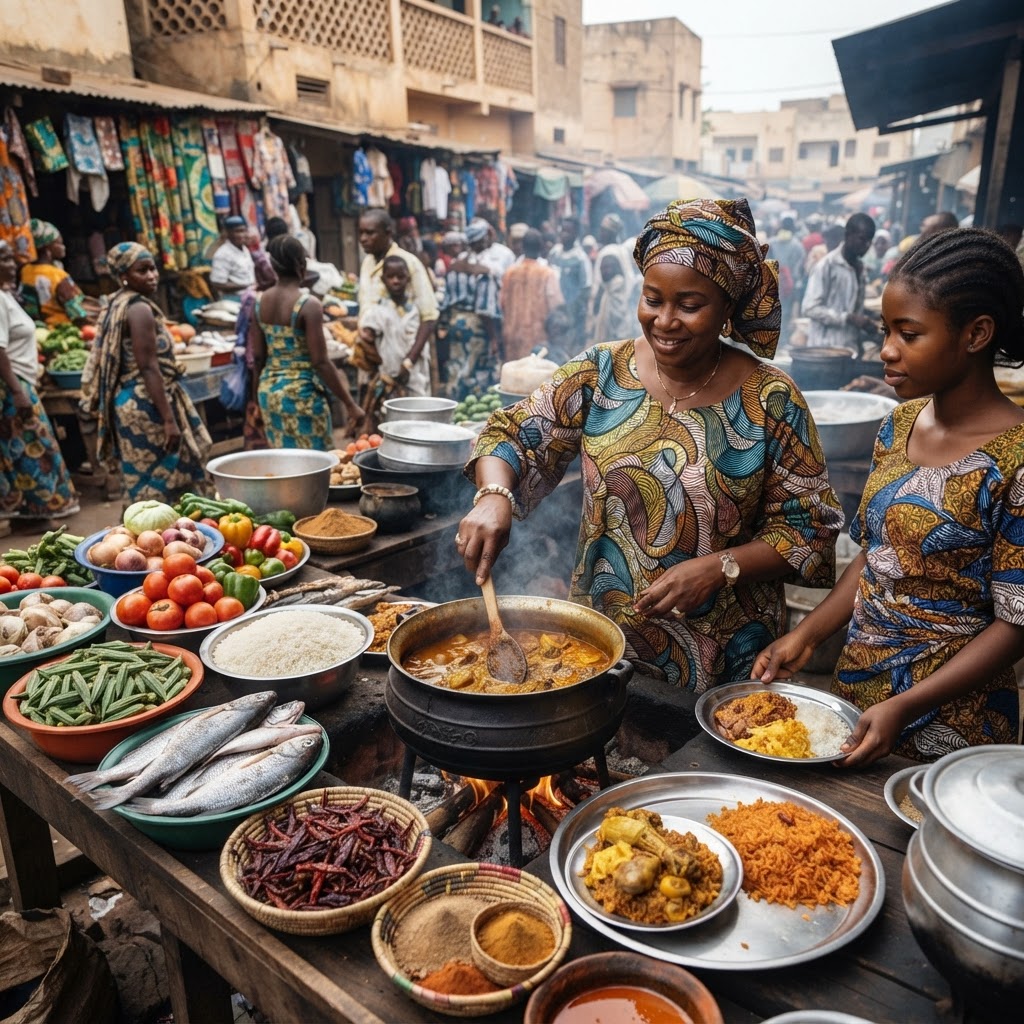
Centuries of trans-Saharan trade introduced external influences that were seamlessly integrated into local culinary frameworks without eroding indigenous cooking philosophies. Arab merchants and travelers brought spices, dates, and wheat couscous to the northern savanna, creating rich borderland food traditions that blended indigenous grains with Mediterranean and Middle Eastern culinary techniques. Cooking methods in the region prioritized slow simmered stews, composite vegetable sauces, and the technique of pounding root vegetables or grains into smooth, elastic doughs collectively known as "swallows." These swallows—paired with complex broths seasoned with smoked fish, fermented seeds, and leafy greens—defined regional nourishment from Senegambia to Cameroon.
The sixteenth century brought catastrophic upheaval through the transatlantic slave trade and European maritime exploration, triggering the Columbian Exchange that irrevocably altered global agriculture. European vessels transported crops from the Americas to West Africa, introducing maize, cassava, peanuts (groundnuts), tomatoes, and fiery chili peppers. Far from passively accepting these foreign cultigens, West African cooks rapidly absorbed them into their sophisticated culinary repertoire, using cassava to create gari and fufu, and transforming South American peanuts into the rich, savory peanut stews known as maafe.
Crucially, as captured in historical research and oral memory, West African food knowledge traversed the Atlantic Ocean aboard captive slave ships. Enslaved African women famously braided grains of indigenous rice into their hair to preserve food for an uncertain future, carrying agricultural mastery and culinary acumen to the Americas. The foundational flavor profiles of the African diaspora—seen in Louisiana gumbo, Lowcountry red rice, Brazilian acarajé, and Caribbean callaloo—are direct botanical and cultural descendants of West African kitchens. Understanding modern West African food requires acknowledging this transatlantic continuum, wherein regional culinary traditions survived violence and displacement to permanently reshape the global palate.
Key Developments
In recent years, several pivotal milestones have transformed West African food from a regional staple into one of the most dynamic sectors of international gastronomy. International industry analysts, including Mintel, have consistently identified West African ingredients and flavors as pivotal drivers of modern consumer food trends. Culinary entrepreneurs are commercializing indigenous pantry staples, creating accessible sauces, meal kits, and retail lines that bridge traditional preparations with modern convenience, introducing mainstream global consumers to the distinct flavor profiles of the region.
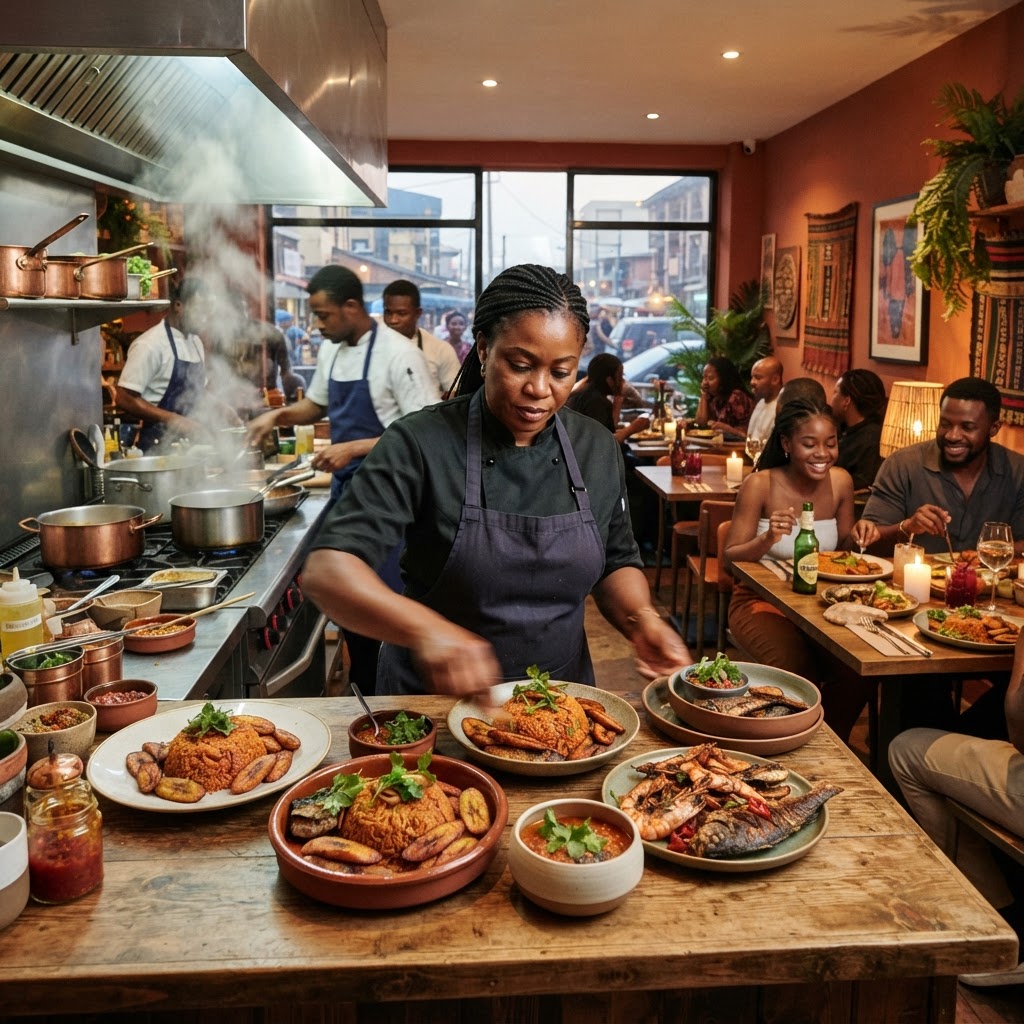
Central to this development is the unprecedented recognition of West African chefs in the highest tiers of the fine dining industry. Groundbreaking restaurateurs across major cultural capitals have earned prestigious accolades, including Michelin stars, by translating ancestral West African cooking into refined, multi-course gastronomic tasting menus. In London, institutions like Ikoyi and Chishuru have earned critical acclaim, while in Paris and New York, visionary African chefs are reimagining classic dishes through artistic presentation, sustainable sourcing, and historical narrative, asserting that jollof, egusi, and pepper soup belong in elite culinary spaces.
Simultaneously, regional debates over culinary supremacy—most famously manifested in the spirited "Jollof Wars" between Nigeria, Ghana, Senegal, and Sierra Leone—have become viral cultural phenomena. While often lighthearted, these lively debates on social media platforms have generated massive international visibility, sparking passionate discussions regarding historical origins, authenticity, and technique. UNESCO acknowledged this cultural depth by inscribing the Senegalese national dish Thieboudienne—the culinary ancestor of jollof rice—onto its Representative List of the Intangible Cultural Heritage of Humanity, validating the culinary artistry of the Wolof people on the world stage.
Key foundational components that define this vibrant culinary universe include:
- The Aromatic Foundation: Known colloquially as the holy trinity of West African cooking, pureed mixtures of fresh tomatoes, red onions, garlic, ginger, and pungent scotch bonnet (atarodo) peppers provide the vibrant, aromatic backbone for stews, soups, and rice dishes.
- Traditional Fermented Seasonings: Fermented locust beans (variously known as iru, dawadawa, or ogiri) yield an unmistakable umami depth, serving as natural flavor enhancers rich in prebiotics that impart complex, earthy dimensions to savory pots.
- Indigenous Grains and Tubers: Ancient heritage crops including fonio, pearl millet, and native yams serve alongside cassava and plantains to produce both celebrated starch doughs ("swallows") and modern nutrient-rich alternative flours.
- Unrefined Red Palm Oil: Extracted from the pulp of the Elaeis guineensis fruit, pure red palm oil contributes a deep crimson hue, unique earthy fragrance, and essential antioxidants to classic soups and sauces.
Expert Analysis and Perspectives
Culinary historians and food anthropologists emphasize that the global elevation of West African foodways must be understood not as an overnight trend, but as an essential historical reckoning. Scholars note that African culinary techniques were deliberately erased or misattributed in colonial literature, which framed African cooking as unrefined or nutritionally deficient. By reclaiming primary source narratives and documenting oral cooking methodologies, contemporary researchers are restoring the intellectual prestige of West African culinary craftsmanship.
"West African food has always been sophisticated, highly scientific, and profoundly connected to local ecology; what is changing today is not our food, but the willingness of the global culinary apparatus to respect its complexity without attempting to strip away its soul."
This perspective is echoed by agricultural economists who point to the immense potential of West Africa's indigenous agricultural assets in addressing climate change. Grains like fonio mature in poor soil conditions with minimal water, offering high drought tolerance and rich amino acid profiles that outcompete conventional commercial grains. As the global agriculture sector seeks climate-resilient solutions, West African ancestral grains are being repositioned as critical assets for planetary food security, attracting investment and modern agronomic research.
"When we examine crops like fonio and native cowpeas, we are not simply looking into Africa’s culinary past; we are looking directly into the future of sustainable planetary nourishment. These foods thrive where industrial monocultures collapse."
Furthermore, leading chefs emphasize that modern culinary interpretation must not divorce dishes from their cultural context. Fine dining adaptation requires delicate balancing: while modern plating and innovative culinary techniques can elevate dining aesthetics, the communal spirit and assertive spice profiles that define the cuisine cannot be compromised to placate conservative Western tastes. Authenticity, experts argue, lies in honoring the integrity of ingredients and the cultural narratives of the people who created them.
"The moment you tone down the locust beans or dial back the foundational scotch bonnet heat to appease an uninitiated palate, you risk flattening the entire historical narrative of the dish. Our role as chefs is to invite diners to rise up and meet the bold complexity of our heritage."
Culinary anthropologists also point to the sensory architecture of West African dining, noting that texture plays as significant a role as taste. The tactile pleasure of "swallowing"—consuming smooth starch doughs alongside slippery, nutrient-dense mucilaginous broths made from okra, jute leaves (ewedu), or melon seeds (egusi)—represents a unique sensory grammar that challenges conventional Western dining paradigms. Expanding appreciation for these unique textures reflects an expanding global culinary literacy.
Impact and Implications
The surge of international interest in West African food traditions carries profound economic, cultural, and environmental implications. Economically, rising global demand for authentic ingredients creates lucrative export opportunities for smallholder agricultural cooperatives across West Africa. In rural regions of Mali, Guinea, Ghana, and Nigeria, women farmers who have preserved heirloom seeds of fonio, shea, and iru are entering high-value export supply chains, generating sustainable livelihoods and promoting local agricultural revitalization.
However, this growing demand also presents structural challenges. Industrial processing constraints and trade logistics within the region often hinder producers from scaling their output efficiently. Furthermore, economic analysts warn of the potential commodification of indigenous staples, pointing to cautionary tales such as South America’s quinoa boom, where international demand temporarily drove local retail prices beyond the reach of native populations. Maintaining equitable, community-first supply chains remains essential as commercialization accelerates.
In the culinary sector, the institutionalization of West African food traditions is prompting major hospitality programs and culinary academies to revise their Eurocentric curricula. Culinary students in global capitals are increasingly trained in the chemical properties of fermented West African condiments and traditional preservation methods such as smoking and solar dehydration. This pedagogical shift expands the boundaries of formal culinary education, demystifying ingredients that were once relegated to ethnic specialty markets.
Moreover, the rise of West African culinary prominence fosters cultural diplomacy and tourism. Nations like Senegal, Ghana, and Nigeria are actively developing culinary tourism initiatives, integrating heritage food tours into national economic growth strategies. Culinary festivals, gastro-diplomacy campaigns, and food symposiums bring together international visitors, agriculturalists, and chefs, generating direct foreign investment and fostering mutual cultural respect.
Reactions from the Diaspora Community
For millions of West Africans living across the global diaspora, the international celebration of their foodways brings deep emotional resonance and cultural vindication. For decades, first- and second-generation immigrants often experienced social stigma around the pungent aromas of their home cooking, with schools and workplaces framing foreign food odors through a lens of exoticism or disapproval. The present transformation of these same foundational dishes into universally celebrated gastronomic art fosters immense pride and cultural validation.
Diaspora communities in cities such as Atlanta, London, Toronto, and Paris have played an instrumental role in sustaining and evolving these food traditions. Immigrant neighborhoods have transformed into culinary havens where generational knowledge is preserved through community markets, specialty grocers, and family-owned chop bars. Second-generation chefs and content creators are leveraging digital media, podcasts, and cookbooks to bridge generational divides, decoding ancestral recipes for contemporary lifestyles while paying homage to the resilience of their immigrant parents.
This culinary pride is evident across diverse diaspora settings:
- Community Pop-ups and Supper Clubs: Grassroots supper clubs hosted by diaspora chefs in urban hubs provide intimate platforms for storytelling, historical education, and adventurous multi-course interpretations of regional staples.
- Digital Food Archives: Content creators and independent documentarians are systematically preserving home-cooking recipes through digital blogs, video channels, and social communities, documenting the nuanced regional distinctions of indigenous dishes.
- Diaspora Grocery Innovation: Modern retail platforms and subscription box services curated by diaspora entrepreneurs are democratizing access to authentic, sustainably sourced West African ingredients, ensuring diaspora kitchens remain tethered to traditional flavors.
Looking Ahead: What Comes Next
As the international profile of West African cuisine continues to ascend, the coming decade will be characterized by institutionalization, market expansion, and ongoing debates over cultural authenticity. Industry observers anticipate substantial venture capital and institutional investment pouring into West African food startups, accelerating consumer packaged goods (CPG) distribution into mainstream supermarkets across North America and Europe. Packaged jollof rice bases, ready-to-drink hibiscus tonics (sobolo or bissap), and fonio grain bowls are poised to achieve widespread commercial retail distribution.
At the same time, regional agricultural networks are expected to focus heavily on modernizing processing infrastructure within the African continent itself. By processing, packaging, and branding indigenous ingredients locally rather than exporting raw commodities for foreign refinement, West African nations can retain vital economic value, create domestic manufacturing jobs, and build resilient regional food systems capable of insulating local economies from global trade disruptions.
On the culinary stage, we are likely to witness greater regional specialization. Rather than treating West Africa as a monolithic gastronomic bloc, international diners will increasingly recognize the distinctive regional identities of Senegambian seafood-centric preparations, the complex chili-and-tuber traditions of coastal Ghana and Nigeria, and the ancient grain-and-dairy food systems of the inland Sahelian republics. This granular appreciation will dismantle remaining generalized stereotypes, elevating regional nuance and hyper-local storytelling.
Furthermore, climate advocacy and culinary policy will converge as international nutrition bodies officially integrate indigenous African crops into global sustainable dietary guidelines. The United Nations and international food security agencies are increasingly identifying West Africa's forgotten heritage crops as central tools for global resilience, ensuring that the legacy of these ancient agricultural practices informs twenty-first-century environmental stewardship.
Conclusion
The culinary traditions of West Africa represent a monumental testament to cultural resilience, agricultural brilliance, and the unifying power of human gastronomy. Far from an emerging culinary trend, these rich foodways have nourished vibrant empires, sustained displaced populations through historical trials, and continuously influenced global food traditions for centuries. The current wave of international celebration merely reflects the world finally awakening to the depth and genius that West African communities have cultivated across generations.
As ancestral ingredients like fonio, fermented locust beans, and red palm oil reclaim global prominence, they do so not merely as culinary novelties, but as vital ambassadors of African history, identity, and ecological wisdom. The dishes of West Africa invite the world to participate in an expansive, joyful culinary ritual that honors the soil, reveres the ancestors, and gathers humanity around a communal bowl. By embracing these flavors, global food culture takes a long-overdue step toward honoring the enduring culinary sovereignty of the African continent.