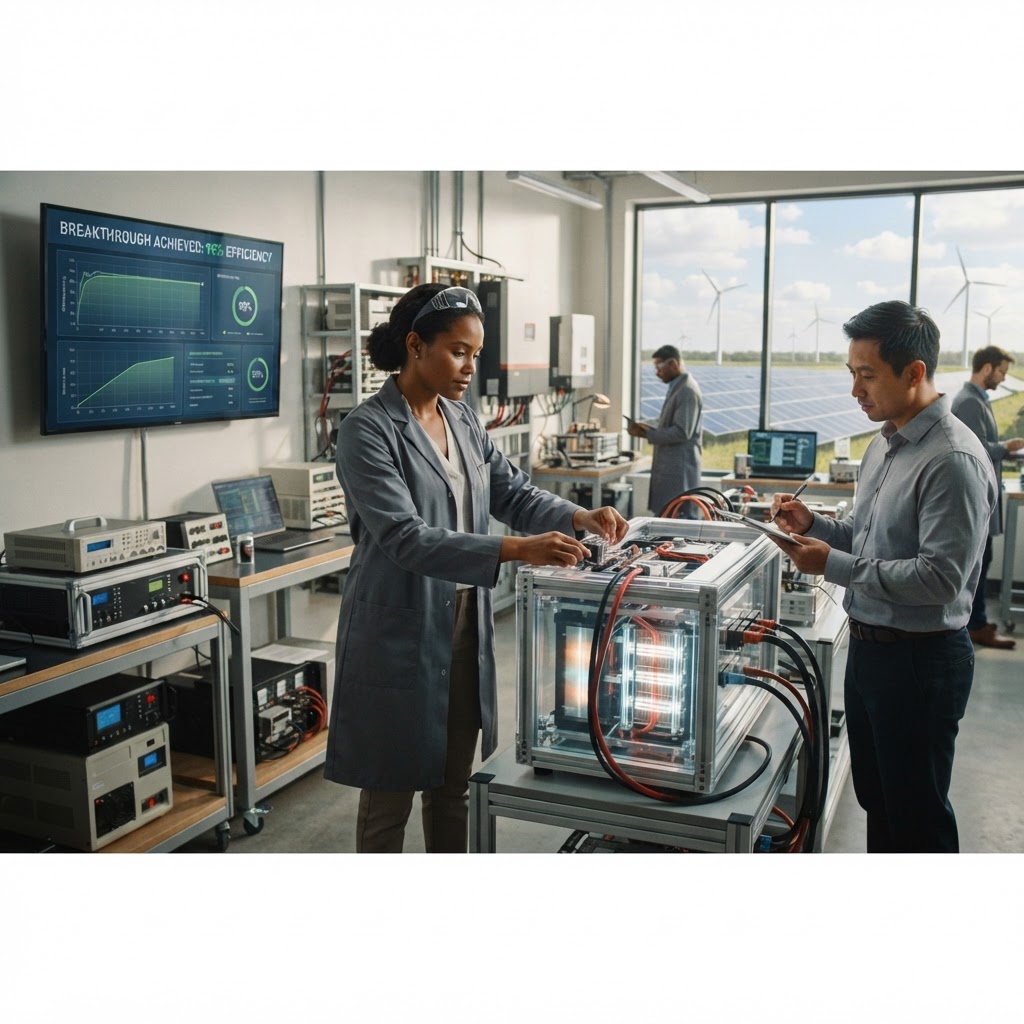
In what is being hailed as a pivotal moment for the global transition toward decarbonization, an international consortium of materials scientists and chemical engineers has unveiled a groundbreaking advancement in renewable energy storage. The development addresses the most persistent challenge confronting clean power generation: intermittency. By engineering a novel multi-valent flow architecture integrated with Earth-abundant mineral compounds, researchers have demonstrated an energy storage mechanism that not only matches the energy density of conventional lithium-ion systems but operates at a fraction of the cost, boasts a lifespan spanning several decades, and eliminates thermal runaway risks. As power grids worldwide groan under the volatile generation cycles of wind and solar installations, this breakthrough provides the missing technological bridge between localized green generation and a resilient, uninterrupted baseload supply.
The Core Dilemma: Resolving Intermittency and Grid Volatility
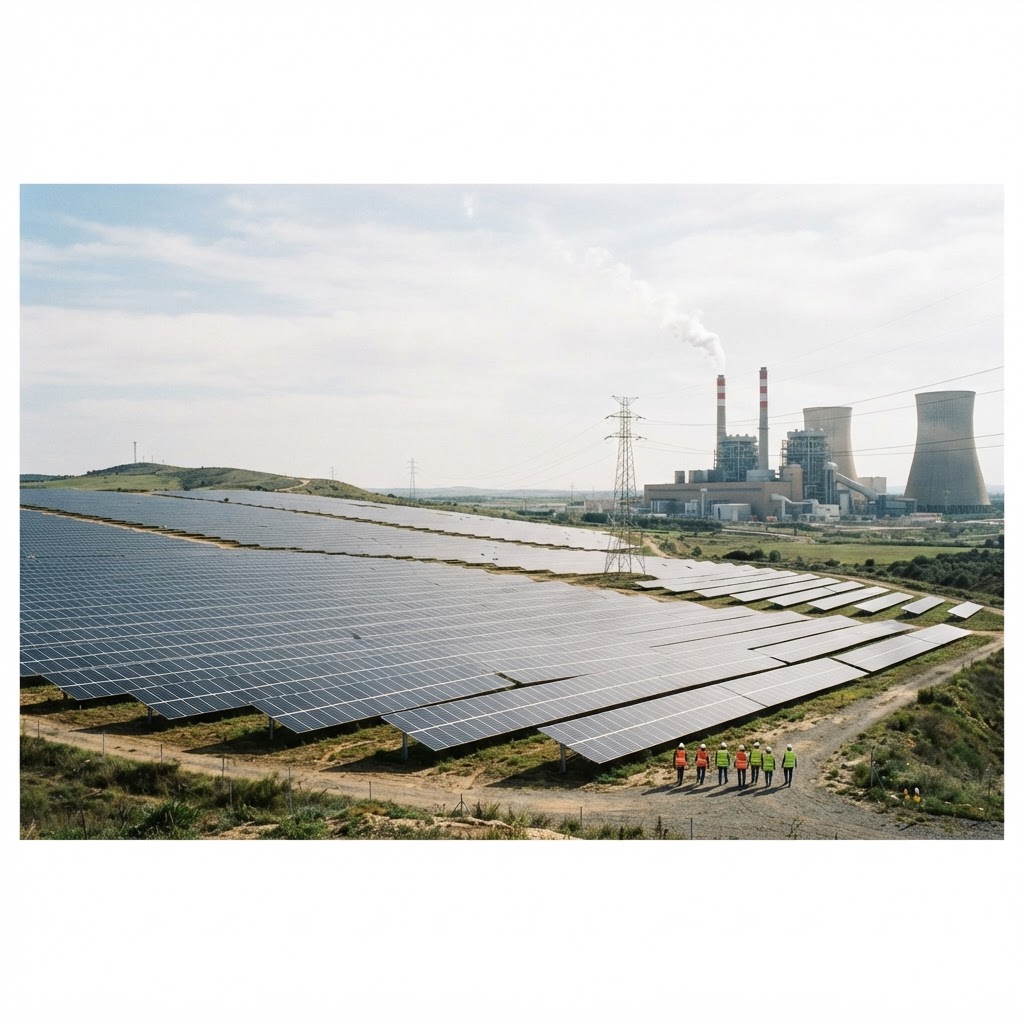
For decades, the global shift toward renewable energy has been hampered by a fundamental physical limitation: generation does not naturally coincide with peak demand. Solar arrays produce their maximum yield during midday hours when industrial and domestic consumption often dips below maximum thresholds, while wind turbines frequently generate their highest yields during stormy nights when the grid requires comparatively little power. This imbalance has historically led to curtailment, a wasteful process wherein renewable power plants are deliberately decoupled from the grid to prevent catastrophic overloading of transmission lines.
Conventional lithium-ion batteries, while instrumental in propelling the consumer electronics revolution and facilitating the initial adoption of electric vehicles, have proven fundamentally ill-suited for utility-scale long-duration energy storage. Their reliance on scarce, geopolitically contentious minerals such as cobalt and battery-grade lithium drives up capital costs. More critically, lithium-ion chemistry degrades rapidly after several thousand charge-discharge cycles, and the inherent risk of exothermic thermal events poses severe hazards when scaled to gigawatt-hour configurations. The newly revealed technology bypasses these limitations by utilizing non-flammable, water-based electrolytes carrying synthesized iron-chromium complexes, delivering round-trip energy efficiencies exceeding 88 percent over ten thousand continuous cycles without observable capacity loss.
Advertisement

"We are witnessing the end of the curtailment era," notes Dr. Elena Vance, lead investigator and chair of materials chemistry at the Global Sustainable Energy Institute. "Until now, our grid architecture has been forced to rely on fossil-fuel peaker plants to manage fluctuations. This new chemical framework allows us to bank vast quantities of clean electrons cleanly, cheaply, and for days or weeks at a time without degradation."
Technological Deep Dive: Molecular Engineering and Earth-Abundant Materials
The technical foundation of this breakthrough lies in overcoming the electrochemical degradation that has traditionally afflicted flow-battery architectures. Flow batteries, which store chemical potential energy in external tanks containing dissolved active compounds, have long offered theoretical advantages over solid-state closed batteries. By decoupling energy capacity (determined by tank volume) from power output (determined by the surface area of the membrane stack), flow batteries allow for modular scaling. However, membrane fouling, active material precipitation, and electrolyte crossover have historically led to rapid efficiency loss.
The breakthrough team resolved these structural impediments through a dual-action innovation:
- Engineered Selective Ion Membranes: Utilizing a bio-inspired polymeric lattice, the new membrane permits the seamless transit of charge-balancing protons while physically blocking larger active coordination complexes, completely arresting electrolyte cross-contamination.
- Chelated Non-Toxic Electrolyte Solutions: By wrapping widely available iron and organic ligand molecules in a proprietary cage-like chemical structure, the solution remains stable across a wide temperature spectrum (-20°C to 55°C), negating the need for expensive climate-controlled enclosures.
- Direct Carbon-Cloth Catalytic Electrodes: The incorporation of tailored carbon nanotube fabrics enhances electron transfer kinetics, allowing the battery to respond to millisecond-level frequency disturbances on the regional grid.
By relying entirely on mineral assets that can be extracted and refined through conventional industrial processes globally, the technology eliminates the single-source supply chain bottlenecks that currently plague lithium, nickel, and rare-earth supply ecosystems.
Economic Implications: Lowering the Levelized Cost of Storage
The economic viability of renewable energy is no longer dictated by the cost of solar panels or wind turbines, which have experienced precipitous price drops over the past two decades. Today, the determinative metric for grid decarbonization is the Levelized Cost of Storage (LCOS). This metric accounts for the total capital expenditures, maintenance overhead, cycle life, and recycling liabilities incurred over a storage system's operational lifetime.
Preliminary financial modeling indicates that this breakthrough system slashes the LCOS to under $22 per megawatt-hour. In comparison, utility-scale lithium-ion storage installations routinely oscillate between $120 and $180 per megawatt-hour when fully amortized over a standard ten-year project lifespan. The extraordinary durability of the newly designed system—projected to exceed thirty years of continuous utility service with minimal active maintenance—radically alters project economics for utility operators, sovereign wealth funds, and private infrastructure developers.
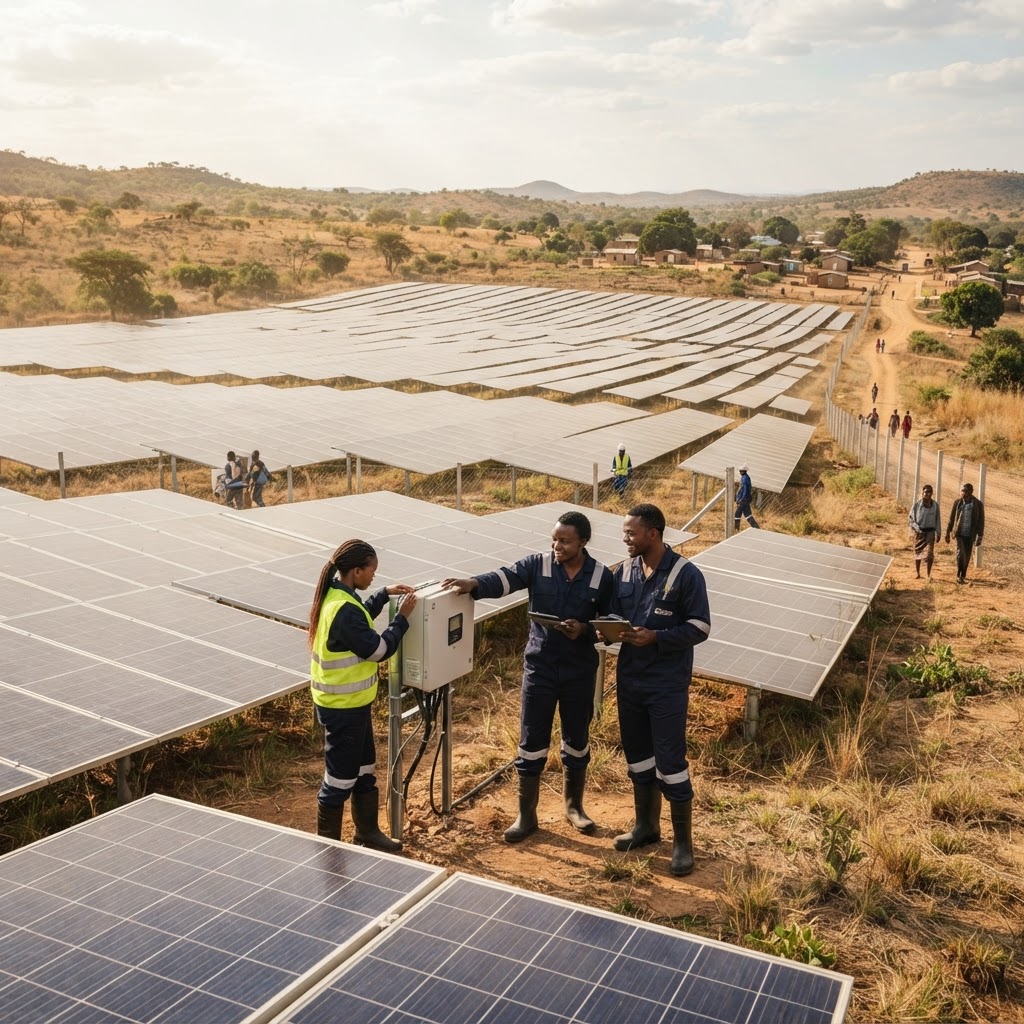
Moreover, the low material cost substantially compresses the capital expenditure hurdle for emerging economies. Developing nations, currently confronting massive surges in energy demand alongside intense capital constraints, have historically struggled to justify the high upfront costs of modern grid-scale batteries. A storage paradigm built on basic chemical foundations opens the door to rapid microgrid deployment, leapfrogging the centralized, carbon-heavy infrastructure models of the 20th century.
Broader Geopolitical and Environmental Context
The geopolitical ramifications of this energy storage breakthrough cannot be overstated. The contemporary clean energy supply chain is characterized by severe concentration risk, with refining capacities for critical battery metals centralized in a handful of jurisdictions. This reality has created substantial vulnerabilities for energy-importing regions such as the European Union and parts of North America, where industrial policy has increasingly pivoted toward protectionism and strategic self-reliance.
Because the inputs for this newly validated battery chemistry can be sourced domestically within nearly every continent, the reliance on fragile trans-oceanic shipping corridors and volatile mineral-producing regions is significantly decoupled from the renewable transition. This shifts energy independence from an ideological aspiration to an engineering reality, dampening the potential for resource-driven geopolitical friction.
From an environmental standpoint, the lifecycle analysis of the new system offers profound improvements. Traditional battery manufacturing carries an extensive ecological debt, driven by water-intensive lithium extraction in sensitive salt-flat ecosystems and energy-intensive strip mining for cobalt and nickel. In contrast, the aqueous solutions developed in this breakthrough are non-toxic, non-corrosive, and can be retrieved, chemically refreshed, and repurposed indefinitely. Decommissioning a facility utilizing this technology presents no hazardous waste footprint, aligning closely with international circular-economy mandates.
The Horizon: Scaling Production and Grid Modernization
Despite the unequivocal enthusiasm surrounding these laboratory and pilot-scale achievements, formidable engineering challenges lie ahead as the technology moves toward gigawatt-scale deployment. Scaling chemical synthesis from metric tons to megatons requires the establishment of specialized manufacturing facilities, standard-setting protocols, and rigorous third-party certification cycles. Utilities are notoriously conservative institutions, heavily regulated and risk-averse, often requiring multi-year operational pilots before commissioning utility-scale capital works.
To accelerate this timeline, an alliance of public-private partnerships has already formed, securing over $1.5 billion in preliminary funding to construct demonstration facilities across diverse climatic zones, ranging from the arid conditions of the American Southwest to the variable coastal environments of Northern Europe. These pilot installations will serve as stress tests, integrating directly into regional distribution networks to evaluate performance during extreme weather anomalies, such as heatwaves and prolonged polar vortex events.