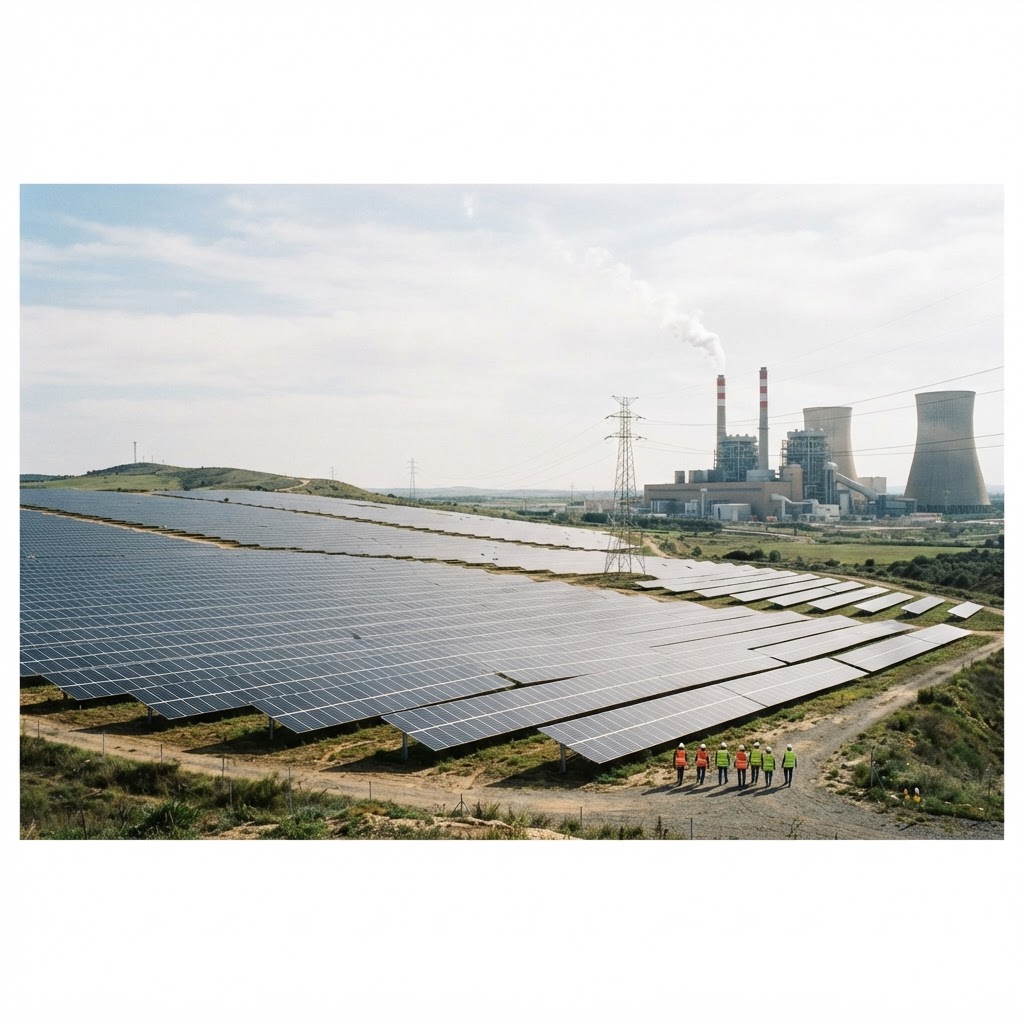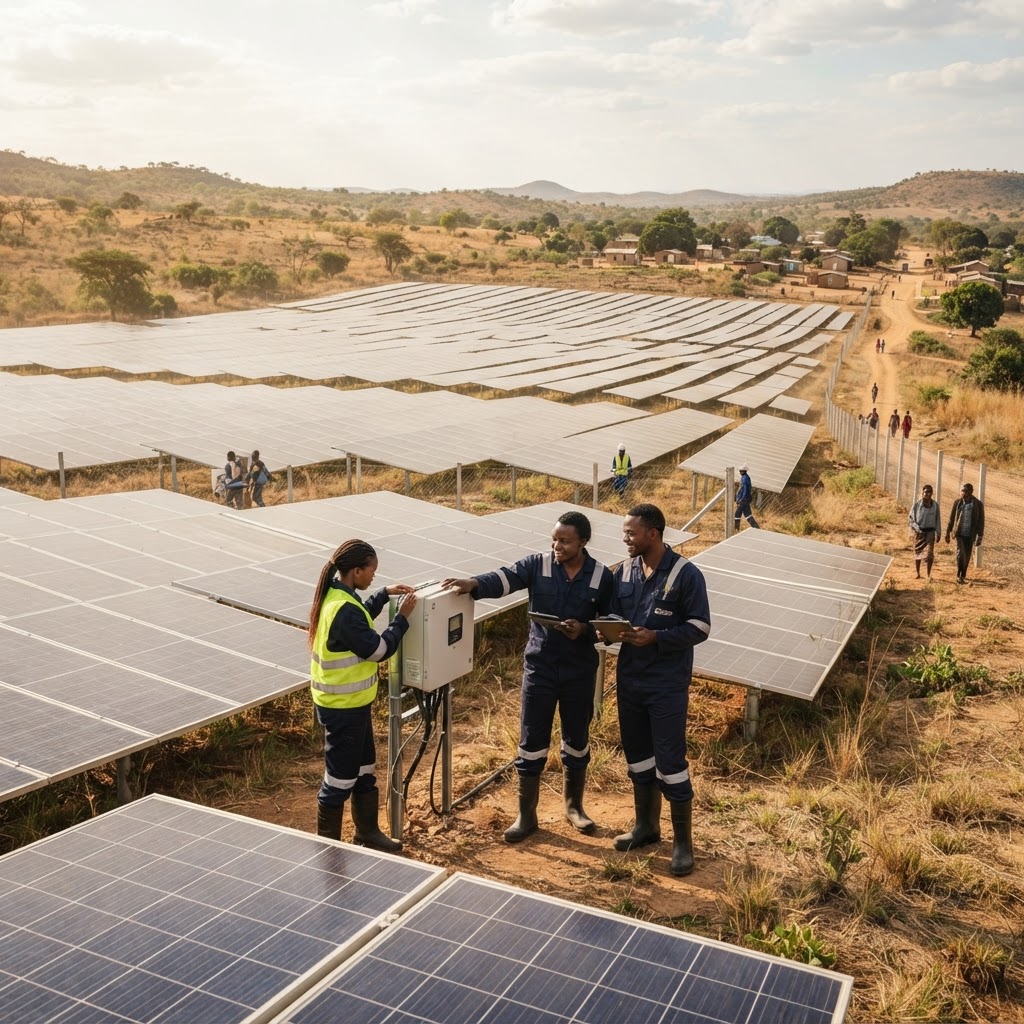
In an extraordinary turning point for global energy systems, total installed solar photovoltaic capacity across developing nations has doubled over the past twenty-four months, outstripping conventional energy growth and fundamentally reshaping the socioeconomic landscape of the Global South. Driven by precipitous declines in hardware manufacturing costs, innovative decentralized financing models, and urgent climate adaptation mandates, emerging economies across Latin America, Southeast Asia, Sub-Saharan Africa, and South Asia are skipping carbon-intensive development pathways in favor of resilient, clean power grids. This historic transformation marks a profound departure from the historic correlation between industrialization and fossil-fuel reliance, signaling that the clean energy transition is no longer an exclusive luxury of wealthy post-industrial economies, but rather an existential and economic engine for developing nations worldwide.
The Drivers of Unprecedented Photovoltaic Expansion
The catalytic factor behind this exponential doubling of capacity is the sharp realignment of renewable energy economics. Over the last decade, the levelized cost of electricity for utility-scale solar has dropped by nearly ninety percent, rendering it the cheapest source of bulk electricity in virtually every major solar-rich emerging market. International supply chains, particularly the massive scaling of crystalline silicon wafer production and photovoltaic module manufacturing, have created an abundant supply of high-efficiency panels at price points unimaginable a generation ago.
Yet hardware deflation represents only half of the equation. Regulatory modernization across several regional blocs has lowered barriers to entry for independent power producers and international private equity. Governments have progressively eliminated punitive import tariffs on renewable energy equipment while implementing competitive reverse-auction mechanisms for national power procurement contracts. These policy shifts have created investment certainty, driving down the cost of capital in markets previously hamstrung by prohibitive risk premiums.
Advertisement

"What we are witnessing is not a temporary bump in installations, but a foundational structural transition. The combination of hyper-competitive panel pricing, mobile-enabled financing, and clear policy directives has turned solar energy into the fastest deployable, most cost-effective utility asset available to developing countries today."
Furthermore, the decentralization of solar infrastructure has matched the architectural needs of developing regions. While traditional coal and hydro installations necessitate billions of dollars in upfront capital expenditure and decades of construction, distributed photovoltaic installations can be deployed incrementally, scaling seamlessly from kilowatt-scale rooftop arrays to gigawatt-scale desert installations.
Socioeconomic Transformation: Electrification Beyond the Central Grid
Beyond macroeconomic utility metrics, the doubling of solar capacity has brought life-altering consequences for hundreds of millions of individuals living outside the reach of centralized electricity grids. In vast regions of Sub-Saharan Africa and isolated archipelagos in Southeast Asia, connecting remote rural communities via traditional transmission lines remains economically unviable due to rugged terrain and low population densities. Solar-powered microgrids and off-grid home systems have bridged this profound infrastructure chasm.
Key impacts across rural and peri-urban demographics include:
- Agricultural Productivity: Solar-powered irrigation pumps have replaced expensive, polluting diesel generators, allowing smallholder farmers to achieve multi-season crop yields while insulating them from global oil price volatility.
- Healthcare Resilience: Off-grid clinics equipped with solar-powered cold-chain refrigeration units can now maintain critical vaccine storage, run diagnostic equipment, and provide continuous nighttime emergency care.
- Educational Empowerment: Reliable solar lighting has extended study hours for students in underserved villages, eliminating indoor air pollution caused by kerosene lamps.
- Commercial Growth: Small-scale commercial enterprises—from cold-storage fish markets to mobile phone charging kiosks—have emerged, creating localized employment and micro-enterprise ecosystems.
The integration of digital finance, notably "Pay-As-You-Go" mobile payment architectures, has democratized consumer access. Families without formal banking histories can purchase distributed solar systems on flexible micro-installments, converting recurring expenditures on fossil fuels directly into productive asset ownership.
Financing Mechanisms and the Multilateral Pivot
The dramatic acceleration of solar capacity has also forced a strategic evolution within international development finance institutions. Entities such as the World Bank, the Asian Development Bank, and the African Development Bank have pivoted their energy lending portfolios away from greenfield fossil projects toward clean technology blended-finance instruments. These institutions are increasingly utilizing sovereign loan guarantees, concessional credit lines, and first-loss capital mechanisms to de-risk commercial private sector investments.
Green bonds and climate-resilience funds denominated in domestic currencies have begun to address one of the historic vulnerabilities of emerging market infrastructure: foreign exchange risk. Because solar power plants generate revenues in local currency while their capital costs were historically financed in hard currencies like the US dollar or euro, currency depreciation historically threatened debt servicing. The development of local currency green capital markets is establishing a far more durable baseline for sustained long-term expansion.
"Blended finance has unlocked pockets of institutional capital that previously deemed emerging market infrastructure uninsurable. By absorbing early-stage regulatory and geopolitical risks, development banks have turned frontier solar markets into robust commercial investment propositions."
Grid Integration and Structural Challenges
Despite this extraordinary growth, the rapid integration of intermittent solar power presents technical and political hurdles that threaten to cap future expansion if left unaddressed. Many emerging markets possess legacy electrical grids designed around centralized, baseline power generators. The sudden injection of variable solar electricity stresses archaic transmission corridors, leading to issues of voltage instability, frequency fluctuations, and significant energy curtailment.
To safeguard the reliability of national grids, developing countries must prioritize investments in complementary systems:
- Battery Energy Storage Systems: Utility-scale battery storage is vital to capture surplus mid-day solar generation and release it during evening peak demand periods, mitigating the risk of brownouts.
- Transmission Modernization: Expanding long-distance high-voltage direct current lines is critical to transport solar energy generated in remote, sun-drenched regions to energy-hungry industrial urban centers.
- Smart Metering and Digitalized Dispatch: Advanced automated distribution management systems are required to dynamically balance real-time supply and demand fluctuations.
- Market Reforms: Outdated regulatory structures that artificially subsidize retail electricity or penalize distributed generation need comprehensive overhauls to maintain utility solvency while incentivizing private microgrids.
Geopolitical Dynamics and Industrial Sovereignty
The solar surge is also reshaping global supply chains and diplomatic leverage. While early phases of this boom depended almost exclusively on imported modules, leading developing nations are now demanding domestic value creation. Countries such as India, Brazil, and South Africa have instituted localized content requirements and production-linked incentives designed to cultivate domestic manufacturing capabilities for photovoltaic components, inverters, and structural racking.
This push for industrial sovereignty serves two critical objectives: mitigating dependency on single-nation supply chains and creating resilient, high-skilled industrial jobs within domestic borders. At the same time, regional trade pacts are enabling neighboring nations to establish cross-border power pools, where countries with massive solar potential can export clean electrons to industrial neighbors, fostering regional economic integration and mutual energy security.
Future Outlook: Toward Terawatt-Scale Deployment
The doubling of solar capacity in developing nations represents an inspiring milestone, but international analysts view this achievement as merely the opening salvo of a much larger industrial realignment. As emerging economies continue to urbanize, industrialize, and expand their digital infrastructures, energy demand is forecast to grow at rates far exceeding those of developed economies over the coming decades. Sustaining this clean energy momentum will require a quadrupling of annual investments in renewable infrastructure by the turn of the decade.
The lessons emerging from the current solar expansion demonstrate that decarbonization and rapid economic development are not mutually exclusive propositions. By pairing modern solar technology with innovative finance, decentralized deployment models, and targeted regulatory modernization, developing nations are actively authoring a new blueprint for sustainable growth. The solar boom has ceased to be an alternative scenario—it is rapidly becoming the foundational bedrock upon which the economic future of the emerging world will be built.