Introduction and Overview
The global travel landscape in 2026 is undergoing a profound structural transformation, driven by travelers who are deliberately turning away from hyper-commercialized hubs and overtrafficked capitals in search of undiscovered enclaves. Industry analysts describe this movement as the rise of the intentional explorer, where journeying off the beaten path is no longer a niche counter-cultural preference but an urgent, mainstream priority. The relentless pressures of global overtourism, combined with sky-high prices across legacy destinations, have triggered a collective recalibration among holidaymakers who now prioritize serenity, authentic human connection, and untamed nature over digital clout and checklist sightseeing.
This decisive pivot is more than just a fleeting aesthetic change on social media feeds; it is fundamentally altering international economics, airline route networks, and local preservation models worldwide. As traditional hotspots such as Venice, Amsterdam, and Kyoto introduce stringent daily caps, tourist taxes, and visitor restrictions, travelers are seeking out regions that welcome visitors with open arms and uncrowded landscapes. Industry intelligence reveals that two-thirds of travelers would actively avoid a holiday spot if they knew it would be crowded, choosing instead to channel their resources into destinations that offer room to breathe and engage respectfully with host communities.
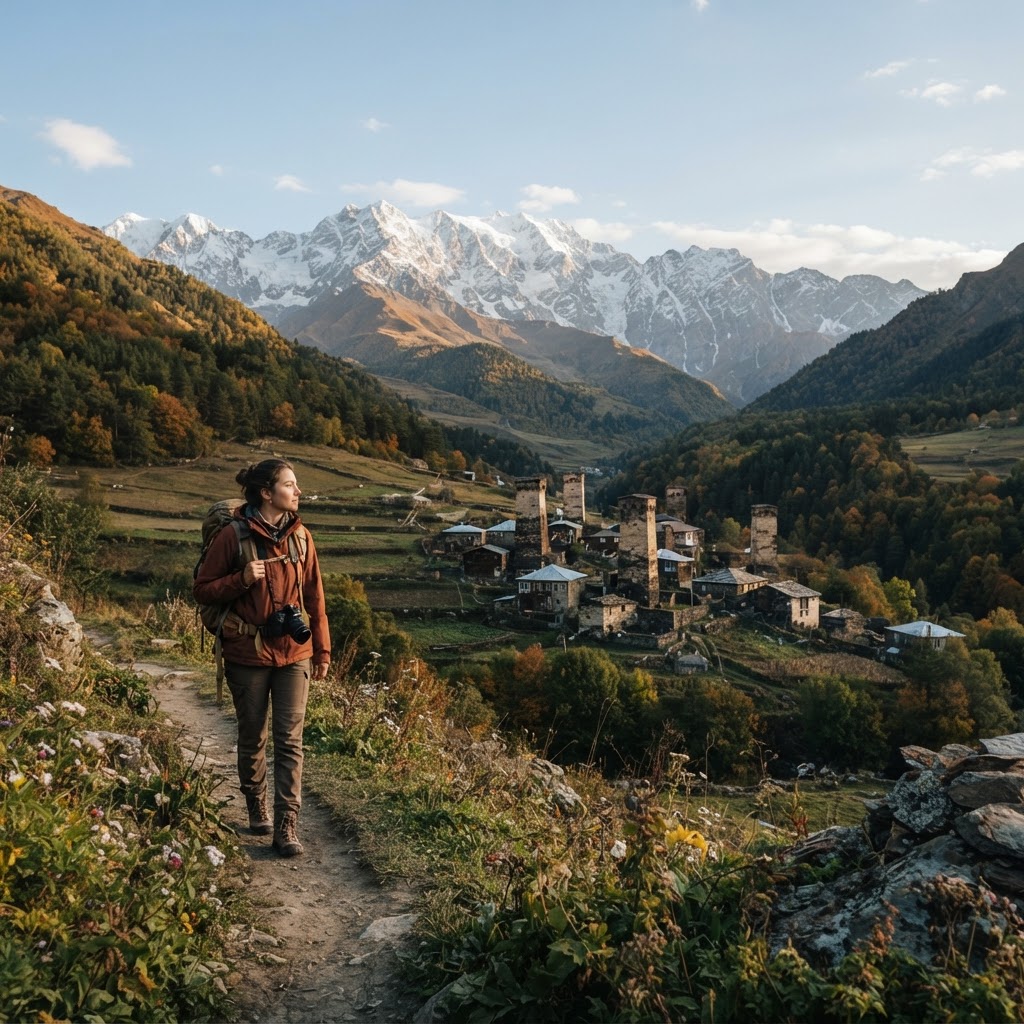
Central to this revolution is the rapid elevation of hidden gems that historically sat quietly on the periphery of international leisure itineraries. Destinations stretching from the volcanic coastline of Alor and Halmahera in Indonesia to the rugged mountain folds of Svaneti in Georgia, the mist-shrouded limestone valleys of Quy Nhơn in Vietnam, and the untouched pampas of Patagonia's northern fringe are capturing the imaginations of curious voyagers. These regions provide a powerful antidote to homogenized resort tourism, offering travelers an opportunity to engage directly with living heritage and pristine biological diversity before widespread commercialization arrives.
Advertisement

Understanding this transition is critical for international aviation boards, municipal planners, environmental stewards, and hospitality investors across the globe. The year 2026 marks the turning point where the definition of luxury has detached itself from gilded hotel lobbies and anchored itself firmly in acoustic tranquility, ecological vitality, and cultural authenticity. As the world navigates an era marked by climate consciousness and digital exhaustion, the search for hidden gems emerges as a defining social, economic, and moral movement shaping the future of human exploration.
Background and Context
The contemporary rush toward non-viral and overlooked destinations is rooted in decades of compounding tensions within the global tourism sector. Following the dramatic deregulation of commercial aviation during the late twentieth century and the subsequent rise of ultra-low-cost carriers, international travel became accessible to billions of people across socio-economic strata. While this democratization opened foreign landscapes to unprecedented numbers, it also laid the foundation for severe spatial concentration, funneling millions of visitors into compact historic districts, fragile coastal ecosystems, and urban centers that were never designed to support such volume.
By the mid-2010s, the meteoric rise of algorithmic social platforms accelerated this imbalance exponentially, turning obscure scenic vistas into viral photo backdrops overnight. Destinations found themselves inundated by massive influxes of day-trippers whose presence created immense municipal strain, drove local residential rents through the ceiling, and degraded the very natural marvels that initially attracted travelers. The phrase 'overtourism' shifted from an academic term into a regular newspaper headline, sparking widespread local protests from Southern Europe to Southeast Asia and leading directly to legislative backlashes against unrestricted visitor flow.
In the aftermath of the global pandemic, a brief window of tranquility allowed ecosystems and host neighborhoods to observe what life felt like without the ceaseless hum of tour buses. When international borders reopened, a chaotic wave of 'revenge travel' flooded legacy markets, resulting in record-shattering crowds, skyrocketing airfares, and widespread traveler burnout. By the middle of the decade, travelers began to recognize that the conventional holiday experience in celebrated capitals had devolved into long queues, timed museum slots, and transactional exchanges with exhausted service workers.
Concurrently, the climate emergency forced both public sector regulators and private travelers to re-examine the carbon footprints and ethical implications of leisure trips. The concept of regenerative tourism moved to the forefront of policy debates, emphasizing that travel should leave a destination ecologically and socially healthier than it was found. Against this historical backdrop, 2026 has emerged as the year of conscious decentralization, where travelers actively reject homogenized tourism corridors in favor of sub-regions, hidden valleys, and maritime preserves that have preserved their soul and natural rhythms.
Key Developments
The movement toward undiscovered destinations in 2026 is punctuated by specific geographical breakthroughs and shifts in consumer habits across the international travel sector. Emerging travel surveys reveal that over 80 percent of travelers now actively consider ecological sustainability and destination carrying capacity when planning major international vacations. This awareness has prompted national tourism ministries to divert their promotional budgets away from flagship urban centers toward underdeveloped provinces, investing heavily in modern train connectivity, rural boutique infrastructure, and regional eco-permitting systems.
One of the clearest manifestations of this trend is the unprecedented rise of secondary and tertiary destinations across Asia, the Caucasus, and the Americas. In Southeast Asia, intrepid travelers are deliberately skipping the saturated shores of southern Bali to explore Indonesia's remote archipelagos such as Raja Ampat, the Banda Sea, and Alor, where low-impact marine sanctuaries and community-run dive boats offer pristine coral reefs teeming with pelagic life. Similarly, in Latin America, Brazil's Pantanal wetlands and the remote volcanic trails of Chile's Aysén region are witnessing an influx of travelers eager to experience authentic wildlife safaris far removed from crowded mass-market circuits.
- The Rise of Non-Viral and Secondary Regions: Travel planning has shifted away from viral social media landmarks toward lesser-known administrative regions within popular countries, such as visiting coastal Quy Nhơn instead of Da Nang in Vietnam, or exploring the dramatic crags of Georgia's High Caucasus instead of overcrowded alpine resorts in Western Europe.
- Expansion of Rail Revivals and Multi-Modal Transit: In lieu of short-haul domestic flights, cross-border sleeper trains and scenic rail links across Eastern Europe, Scandinavia, and North Africa are experiencing historic ticket sales, allowing vacationers to slow down and access remote heritage villages at their own pace.
- Implementation of Digital Dispersion Technology: Municipal and state boards are deploying real-time digital permits, visitor dispersion apps, and off-peak incentives that reward travelers who book rural farm stays, conservation outposts, and lesser-visited biosphere reserves.
- Surge in Community-Led Ecotourism Cooperatives: Indigenous and rural communities are seizing ownership of tourism hospitality, opening cooperative trail huts, hyper-local culinary lodges, and guided heritage treks that channel vacation dollars directly into neighborhood preservation funds.
European travel patterns show a dramatic eastward and northward recalibration, with destinations such as Albania, Montenegro, and the remote fjords of Northern Norway drawing travelers away from the scorching, high-density coastlines of the Mediterranean basin. These newly celebrated spots offer world-class cultural discoveries and magnificent landscapes at price points that remain accessible to middle-income adventurers. By diversifying tourist footprints, these emerging destinations are demonstrating that economic revitalization through travel does not have to come at the expense of environmental degradation or communal displacement.
Expert Analysis and Perspectives
Tourism researchers and commercial aviation specialists point out that the current pivot toward hidden gems reflects a fundamental psychological and operational shift within the international leisure sector. Rather than seeking passive relaxation within insular resort bubbles, contemporary holidaymakers are demanding authentic immersion, intellectual stimulation, and verifiable sustainability. This behavioral shift is placing substantial pressure on legacy travel companies to rewrite their entire product portfolios, phasing out standardized package tours in favor of hyper-tailored, localized expeditions.
"We are witnessing an unprecedented transition where travelers are deliberately walking away from recognizable status symbols in favor of personal discovery. In 2026, the greatest travel luxury is not an infinity pool surrounded by hundreds of strangers, but the extraordinary stillness of a remote valley where you can listen to the wind and engage in unscripted conversations with local artisans."
— Dr. Elena Vance, Director of Sustainable Tourism Dynamics at the Global Travel Institute
Commercial strategists emphasize that consumer decision-making has fundamentally decoupled from loud marketing campaigns and algorithm-driven lifestyle imagery. Market intelligence indicates that travelers have grown skeptical of highly staged digital content, actively seeking out uncurated, independently verified recommendations from returned field researchers, independent journalists, and specialized travel collectives. Consequently, destination marketing organizations that fail to protect their local cultural fabric and natural habitats risk suffering swift reputational backlash from discerning travelers who prize environmental integrity above all else.
"Two-thirds of travelers worldwide now confirm that they will actively abandon a trip if they anticipate unbearable crowds and commercial saturation at their destination. Providers and municipalities that understand this early and invest in low-density, high-value infrastructure are capturing the market, while overcrowded legacy cities scramble to manage public discontent."
— Julian Davenport, Principal Strategy Partner at Simon-Kucher Travel Insights
Furthermore, marine biologists and wildlife preservationists operating in frontline conservation habitats view the rise of regulated, low-impact adventure tourism as an indispensable financial lifeline for endangered biospheres. When managed through strict visitor quotas, liveaboard requirements, and mandatory local guide frameworks, tourist capital provides municipal governments with a compelling economic justification to outlaw destructive extractive practices such as bottom trawling, illegal logging, and open-pit mining in favor of long-term conservation economies.
"Responsible adventure travel possesses the unique capacity to transform fragile ecosystems from battlegrounds of resource exploitation into thriving wildlife sanctuaries. When a visitor spends money at a community-run eco-lodge in the Pantanal or embarks on a marine research expedition in Alor, they are directly funding the rangers, scientists, and indigenous stewards working around the clock to protect these global treasures."
— Dr. Marcus Thorne, Chief Marine Conservation Scientist at the Oceanic Exploration Initiative
Industry leaders caution, however, that the romanticization of hidden gems brings inherent operational perils that require relentless vigilance. Without prudent infrastructure management, comprehensive waste-treatment facilities, and rigorous local zoning policies, the hidden paradises of 2026 run the real risk of falling prey to the exact same overtourism disasters that ruined yesterday's pristine sanctuaries. The defining test for regional authorities over the coming decade will be their willingness to deliberately constrain tourist volume in order to preserve ecological integrity and cultural autonomy.
Impact and Implications
The economic, cultural, and environmental consequences of this widespread shift toward off-the-beaten-path destinations are far-reaching and deeply felt across multiple continents. For decades, international travel expenditure remained heavily concentrated in a tiny cluster of global megacities, creating massive regional economic disparities within host nations. The intentional dispersion of travelers across provincial villages, secondary river towns, and agrarian valleys is democratizing wealth distribution, infusing small family businesses, agricultural cooperatives, and local heritage guilds with vital capital.
In rural economies across Eastern Europe, Southeast Asia, and Central America, this financial infusion is reversing decades of damaging rural flight. Young professionals, regional storytellers, culinary innovators, and multilingual hospitality workers who were once forced to migrate to overcrowded capitals in search of employment are now finding lucrative careers in their ancestral hometowns. The opening of micro-boutique guesthouses, specialized outdoor guiding services, and regenerative farm-to-table restaurants is revitalizing forgotten architectural districts and breathing vibrant life into traditional crafts that were on the brink of extinction.
- Decentralization of Municipal Tax Revenues: Provincial governments are experiencing unprecedented budgetary expansions, allowing local councils to modernize water purification facilities, expand public rail corridors, and upgrade healthcare centers without relying exclusively on national subsidies.
- Mitigation of Environmental Degradation in Historic Hubs: By siphoning millions of leisure travelers away from fragile urban centers and overfished coastlines, legacy hotspots are gaining the necessary ecological respite to rehabilitate historic infrastructure and restore urban biodiversity.
- Protection of Fragile Terrestrial and Marine Ecosystems: Entry fees collected from travelers visiting designated hidden biosphere reserves provide non-dilutive, ring-fenced funding for local forest rangers, anti-poaching squads, and marine habitat regeneration projects.
- Cultural Exchange Devoid of Commercial Caricature: Travelers entering secondary communities interact with local residents as equal participants in cultural dialogue rather than passive consumers of staged tourist folklore, fostering genuine mutual respect.
Nevertheless, rapid tourist decentralization brings delicate governance challenges that municipal planners must address immediately. Regions lacking sophisticated sewage processing networks, municipal waste sorting, and durable secondary roadway networks can quickly become overwhelmed by even modest visitor increases. Moreover, property values and residential rental rates in idyllic, once-overlooked villages can escalate sharply if unregulated short-term holiday rentals are allowed to cannibalize the local housing stock. Sustainable longevity requires regional planners to enact strict protective zoning regulations and local residential safeguards before the influx of outside real estate capital permanently alters community life.
Reactions from the Diaspora Community
Among the most vocal and emotionally invested stakeholders in this global pivot are members of worldwide diaspora communities, who view the growing appreciation for their ancestral homelands with a mixture of pride, optimism, and cautious anxiety. For generations, second- and third-generation immigrants living in North America, Western Europe, and Australasia saw their countries of heritage depicted in international media primarily through the narrow lens of economic hardship, geopolitical instability, or climate vulnerability. The sudden international celebration of their home provinces as sophisticated, culturally rich sanctuaries of global significance represents an empowering narrative reclamation.
In Albanian, Georgian, Sri Lankan, and Indonesian diaspora hubs across London, Toronto, Melbourne, and New York, young professionals are actively coordinating cultural preservation funds and heritage investment syndicates. Many are returning to their ancestral towns during extended leaves or remote-work sabbaticals, deploying their international savings and technical expertise to launch sustainable eco-lodges, bilingual guide collectives, and local art foundations. This reverse talent and capital flow is creating deep bonds between diaspora professionals and local rural leadership, ensuring that international tourism ventures remain fundamentally anchored in familial heritage and indigenous values rather than foreign corporate ownership.
At the same time, diaspora community leaders emphasize the critical importance of preventing commercial exploitation and cultural commodification. Speaking at cultural summits and heritage workshops worldwide, community representatives frequently caution that regional development must never reduce sacred ancestral landscapes, burial grounds, and historic religious rites into cheap vacation commodities for casual consumption. They are actively lobbying national tourism ministries to prioritize indigenous land tenure, implement mandatory cultural orientation codes for foreign visitors, and ensure that ancestral stewards retain ultimate veto authority over commercial developments that could disrupt their timeless ways of life.
Looking Ahead: What Comes Next
As the travel sector approaches 2027 and looks toward the next decade of leisure exploration, the quest for undiscovered territories will be heavily influenced by technological innovation, climate realities, and international transportation policies. Artificial intelligence is rapidly evolving beyond basic itinerary generation into sophisticated, multi-modal travel companions capable of dynamic spatial dispersal. Next-generation planning platforms will soon incorporate real-time capacity data, carbon-intensity trackers, and hyper-local weather models, actively redirecting independent travelers away from surging queues and guiding them toward tranquil, community-endorsed alternative experiences in real time.