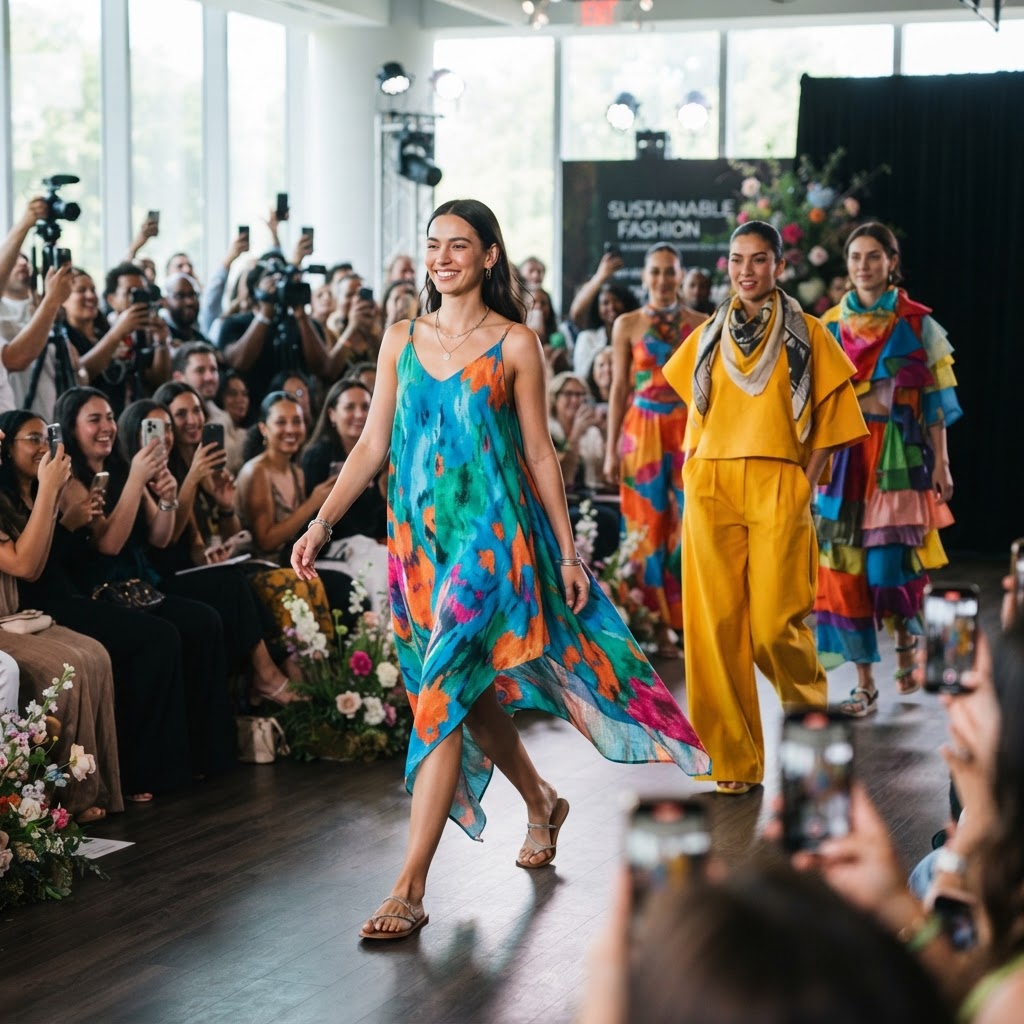
The global fashion capitals have completed their seasonal circuit, leaving the industry with an unequivocal message: the aesthetic restraint and muted earth tones that defined recent transitional periods have been decisively abandoned. Instead, the Spring runways presented an unapologetic embrace of hyper-saturated hues and daring color blocking, underpinned by an unprecedented institutional shift toward material sustainability. What emerged across New York, London, Milan, and Paris was not merely a change in sartorial taste, but a coordinated recalibration of how garments are conceived, dyed, sourced, and valued in a climate-conscious marketplace.
Historically, vibrant palettes and rigorous eco-friendly standards occupied opposing ends of the production spectrum. Bold colors typically required energy-intensive synthetic dyes, heavy metal fixatives, and petroleum-based synthetic textiles that resisted degradation. This season, however, luxury conglomerates and independent ateliers alike demonstrated that technological innovation has finally bridged that divide. The runways vibrated with electric saffron, radiant cobalt, intense fuchsia, and sharp chartreuse, executed through closed-loop water systems, microbial pigment fermentation, and entirely plant-derived dye mechanisms that minimize environmental runoff.
Industry analysts point out that this visual exuberance reflects a collective cultural desire for renewal and emotional uplift. Consumers, fatigued by prolonged global volatility and economic tightening, are seeking out pieces that deliver distinct psychological energy. Yet, the modern shopper is simultaneously more educated regarding supply-chain ethics than at any prior point in commercial retail. The creative directors responsible for this season’s collections recognized that consumer optimism could no longer be sold through unexamined excess; it required a structural foundation that aligned with contemporary ecological scrutiny.
Advertisement

Central to this transition is the reinvention of foundational textiles. While previous sustainable efforts frequently relied on traditional unbleached linen, organic raw cotton, or rough hemp, this spring elevated alternative fibers into the realm of ultra-luxury. Silken drapery, structured tailoring, and architectural coats were rendered in fibers derived from agricultural byproducts, including banana bark, pineapple leaves, and citrus rind extracts. These bio-synthetics not only replicate the hand-feel, luster, and fluid drape of high-grade silk and virgin viscose, but they also significantly reduce the sector's reliance on industrial forestry and fossil-fuel-derived synthetics.
The leather market, long a lightning rod for environmental and animal welfare criticism, similarly reached a watershed moment. High-profile heritage houses showcased full-length overcoats, sharply constructed trousers, and modular accessories made from mycelium networks and waste biomass. Unlike the first-generation polyurethane substitutes of previous decades—which often degraded poorly and shed persistent microplastics—these next-generation circular biomaterials offer breathability, durability, and a genuine patina over time. Their presentation in electric orange and deep lapis blue sent a clear signal to market observers that the material transition has matured past the experimental stage into mainstream commercial readiness.
Behind the scenes, the mechanics of color application underwent equal scrutiny. Several marquee presentations collaborated directly with clean-tech laboratories to debut garments dyed using engineered bacteria and natural algae cultures. This process allows fabrics to achieve saturation without the toxic mordants and monumental water footprints historically associated with textile dyeing. In cities where traditional runoff has historically decimated local aquatic ecosystems, these closed-loop, biodegradable inputs represent a major leap toward genuine operational circularity.
Yet, seasoned industry observers maintain a degree of pragmatic skepticism. While high-end designers command the profit margins necessary to absorb the higher initial costs of laboratory-grown dyes and regenerative fibers, mass-market scalability remains a towering challenge. Fast-fashion retailers, quick to mirror runway visuals, face structural pressures that disincentivize expensive green procurement. Without rigorous global transparency standards and legislative accountability, there remains a persistent risk that the aesthetic of bold, conscious fashion will simply be replicated through cheaper, environmentally damaging polyester blends and petrochemical pigments.
Nevertheless, the economic appetite among institutional buyers appears to be pivoting. Department store executives and boutique curators attending European trade showcases noted a fundamental evolution in purchasing criteria. Merchandising strategies for the upcoming retail quarter are increasingly prioritized around provenance verification, digital product passports, and end-of-life recyclability. A striking silhouette or striking chromatic palette is no longer sufficient on its own merits; wholesale orders are contingent upon a brand’s ability to document its carbon metrics and ethical labor practices.
Furthermore, designers approached construction with longevity front and center, pushing back against the fast cycle of obsolescence. Even while adopting current color trends, pattern makers incorporated modular hems, reversible silhouettes, and zero-waste tailoring techniques that maximize the fabric's lifecycle. Garments were deliberately crafted to outlast seasonal micro-trends, designed with classic proportions that allow vivid hues to function as timeless wardrobe statements rather than disposable novelties.
The broader cultural implication of the Spring presentations suggests an industry shedding its long-standing defensive posture regarding sustainability. For years, responsible fashion was framed through the language of austerity, compromise, and visual minimalism. The prevailing assumption dictated that to make a garment sustainable, one had to sacrifice aesthetic dynamism. This season dismantled that premise entirely, replacing performative austerity with technical mastery, joy, and uncompromising creative ambition.
As these collections prepare to move from the runways to boutique floors and major distribution networks, the fashion system faces an inflection point. The convergence of radiant aesthetics and sustainable chemistry proves that the tools for widespread industry transformation are now viable. The ultimate measure of success will not be found in the applause following a ten-minute catwalk presentation, but in whether these pioneering methodologies become the standard baseline for production worldwide, proving that high design and planetary stewardship can successfully coexist.