Introduction and Overview
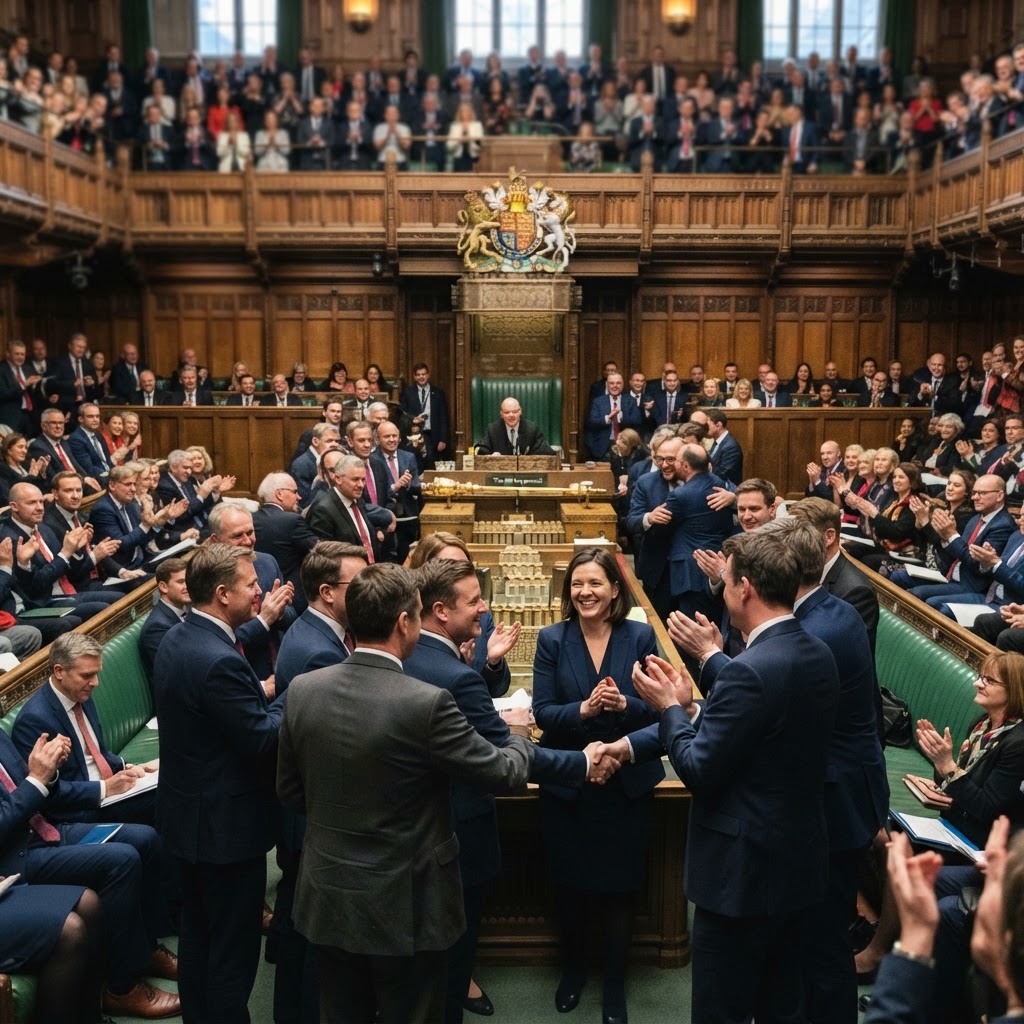
In a historic parliamentary session that culminated after months of intense debate, scrutiny, and public mobilization, the Education Reform Bill has officially passed Parliament. The landmark legislation enacts the most comprehensive overhaul of the national learning architecture seen in a generation, establishing far-reaching structural interventions across early childhood, compulsory primary and secondary schooling, vocational credentialing, and state-level regulatory governance. Lawmakers voted late into the evening, clearing the final legislative hurdles and cementing an ambitious policy program championed by coalition leaders, education reform advocates, and regulatory bodies.
The passage of this bill comes at a transformative juncture for educational institutions grappling with deep pedagogical shifts, post-pandemic learning disruption, technological disruption, and shifting demographic realities. Across urban centers and rural heartlands alike, public schools, community providers, and early childhood centers have faced chronic underfunding, fragmented regulatory accountability, aging infrastructure, and systemic inequities in learning achievement. By reorganizing how school facilities are funded and managed, overhauling the oversight of standard setting, and setting enforceable guidelines for foundational learning benchmarks, the newly passed statute seeks to build a resilient, forward-looking education system capable of meeting twenty-first-century demands.
Beyond administrative reorganizations, the legislation holds immense symbolic and socioeconomic importance for modern multi-ethnic societies. It directly addresses the evolving needs of migrant families, First Nations populations, and multicultural communities, ensuring that public education reflects diverse linguistic backgrounds and historical realities while maintaining rigorous international standards. Parliamentary leaders emphasized that this reform is not merely a bureaucratic consolidation, but an expansive human-capital investment designed to dismantle systemic barriers, empower classroom teachers, and safeguard the educational entitlements of every child regardless of postcode or ancestral background.
Advertisement

Crucially, the legislation addresses longstanding tensions between centralized administrative command and grassroots educational autonomy. For years, educators and school boards have wrestled with overlapping mandates from fragmented statutory bodies, redundant compliance reporting, and slow administrative responses to failing school facilities. With the formal enactment of this reform, the state signals an unequivocal commitment to programmatic clarity, independent evaluation, transparent resource allocation, and a holistic focus on learner wellbeing, setting the stage for what many commentators describe as a defining transformation in public policy.
The passage of the bill also arrives against an international backdrop of intense policy debate over how liberal democracies fund, inspect, and modernize their school networks. International monitoring indices, comparative pedagogical assessments, and the rapid rise of artificial intelligence have forced governments worldwide to re-examine whether conventional twentieth-century classroom models remain fit for purpose. By enshrining continuous monitoring, streamlined administrative oversight, and modular learning credentials into national law, Parliament has delivered an institutional roadmap that will reverberate through classrooms, teacher preparation institutes, and immigrant households for decades to come.
Background and Context
To fully appreciate the scope and urgency of the Education Reform Bill, one must examine the institutional antecedents that brought the education system to this critical crossroads. The governing framework for primary, secondary, and tertiary administration was laid out decades ago through legacy enactments, most notably foundational acts like the Education and Training Act 2020 and historical statutory archetypes such as the transformative Education Reform Acts of the late twentieth century. While these earlier statutory mechanisms successfully expanded universal access and laid the groundwork for national curriculum frameworks, they inadvertently established fragmented administrative jurisdictions where regulatory bodies often duplicated responsibilities while allowing critical systemic vulnerabilities to fester unattended.
Over the past fifteen years, independent reviews and longitudinal assessments have painted an alarming picture of educational stagnation and widening disparity. Reports consistently highlighted that socio-economically marginalized cohorts, indigenous students, and newly arrived migrant populations were falling behind in core numeracy and literacy competencies. Furthermore, school infrastructure suffered from decades of deferred capital maintenance, leaving regional schools with inadequate ventilation, aging digital connectivity, and substandard physical accessibility. Successive administrations attempted piecemeal policy adjustments, temporary grants, and localized administrative directives, but these ad hoc measures routinely failed to alter the foundational dynamics driving systemic underperformance.
At the center of persistent criticism was the ambiguous division of labor between departmental ministries and independent review commissions. The Ministry of Education held conflicting responsibilities as both system developer, property landlord, regulator, and operational adjudicator, creating inherent conflicts of interest when institutions failed to perform. Concurrently, regional school boards complained bitterly of administrative overburden, noting that teachers spent an excessive percentage of instructional hours fulfilling compliance paperwork rather than engaging in direct pedagogical mentorship. The emergence of community charter initiatives and specialized vocational micro-credentials further strained legacy administrative frameworks, which were simply unequipped to regulate flexible educational formats.
The political impetus to finally enact comprehensive statutory reform accelerated as national business federations, civic organizations, and academic coalitions began sounding the alarm regarding declining productivity and structural workforce shortages. Global assessment metrics like the Programme for International Student Assessment (PISA) revealed slipping baseline capabilities in reading comprehension and analytical problem-solving among secondary graduates. The compounding crises made it virtually impossible for parliamentary leadership to defer action any longer, prompting a dedicated legislative committee to draft a unified, omnibus reform package that could consolidate regulatory authorities, depoliticize school asset investments, and establish transparent metrics for academic accountability.
The ensuing parliamentary drafting process sparked intense philosophical arguments over the very soul of the public education compact. Conservative parliamentarians lobbied heavily for enhanced parental school choice, transparent comparative reporting, and greater operational autonomy for non-traditional providers, while progressive factions fought tenaciously to protect universal collective bargaining agreements, reinforce public equity safeguards, and mandate deep integration of indigenous histories and multicultural perspectives into core curricula. The compromise bill that ultimately navigated parliamentary select committees reflects an intricate reconciliation of these competing societal philosophies, cementing structural efficiency alongside robust equity mandates.
Key Developments
The legislative breakthrough occurred after a marathon series of readings, committee reviews, and late-night amendments that carefully reshaped the text of the reform bill into its final statutory format. Central to the newly enacted framework is a deliberate decoupling of regulatory inspection from core policy operations. Beginning in late 2026, regulatory oversight over early childhood education, private schools, and student hostels will be officially transferred from the Ministry of Education to an autonomous, reinforced Education Review Office (ERO). This structural reordering ensures that school reviews are conducted by an arm's-length inspectorate with uninhibited statutory power to investigate institutional compliance, safety, and instructional effectiveness.
Another monumental pillar of the legislation is the formal establishment of a dedicated School Property Agency, an independent operational entity tasked with taking over the multi-billion-dollar portfolio of state educational real estate. By removing school property planning, construction, seismic retrofitting, and facility maintenance from the day-to-day duties of the central ministry, the bill seeks to professionalize asset stewardship and end chronic delays in classroom modernizations. School boards and principals will no longer need to navigate bureaucratic ministerial approvals simply to repair crumbling roofs or install specialized science laboratories, allowing school administrators to focus their talents entirely on instructional excellence.
The legislative package introduces several decisive shifts in educational delivery and accountability:
- Independent Property Governance: Centralizing capital planning, physical school construction, routine maintenance, and technological infrastructure beneath the newly established School Property Agency to eliminate procurement backlogs.
- Reorganized Regulatory Mandates: Transferring regulatory supervision of all early learning services, private educational academies, and boarding hostels to the independent Education Review Office, creating clear lines of accountability.
- Standard-Setting and Professional Accreditation: Transferring foundational teacher professional standards to the direct purview of the Secretary for Education while reforming licensing councils to focus directly on professional ethics and support.
- Mandatory Benchmark Monitoring: Legally compelling schools to participate in transparent national assessment frameworks and recognized international evaluation studies, including PISA.
- Modern Qualification Recognition: Formalizing micro-credentials and flexible modular competencies within national qualification databases to empower lifelong adult learning and vocational agility.
- Charter and Specialized Settings: Establishing streamlined, transparent contractual pathways that allow single sponsor agreements across multi-campus networks while protecting the reversion of converted academies back to full state operation.
Debate reached its crescendo over clauses altering the role of professional teacher registration bodies and curriculum frameworks. Teacher federations and opposition lawmakers engaged in fiery floor debates over the decision to move the setting of professional teaching standards directly under ministerial leadership. Proponents successfully maintained that standard-setting requires direct democratic accountability to ensure consistent pedagogical excellence nationwide, whereas union representatives voiced intense wariness over potential political interference in pedagogical methods. In a critical late concession, lawmakers incorporated a mandatory consultative covenant requiring meaningful engagement with educator representative bodies and community elders before any binding alterations to professional standards can be decreed.
The final legislation also institutes stringent early-intervention mechanisms for struggling academic institutions. When a primary school or secondary college exhibits persistent structural underachievement, poor student retention, or systemic governance failures, a newly created joint triage protocol between the ministry and the review office will trigger proactive external mentorship and emergency financial support rather than punitive immediate closure. This restorative approach was widely lauded during final committee debates, illustrating a widespread legislative intent to rehabilitate struggling community schools rather than simply abandoning them to market forces.
Expert Analysis and Perspectives
Educational policy analysts, constitutional scholars, and classroom practitioners have responded to the passage of the bill with a combination of high optimism, rigorous institutional critique, and acute awareness of implementation hazards. Scholars point out that while structural realignments on paper are essential, the success of the reform will depend entirely on how operational agencies execute their new mandates across heterogeneous local environments. The depoliticization of property assets is widely recognized as a masterstroke, yet the consolidation of curriculum standards under central administrative oversight continues to generate substantial debate among academic professionals.
Dr. Elena Rostova, Senior Fellow in Public Policy at the Center for Global Educational Governance, emphasized the structural significance of separating operational funding from regulatory inspection:
"When a singular government ministry acts concurrently as provider, paymaster, and primary regulator, you inevitably create systemic institutional blindness. By transferring real-time regulatory enforcement to an independent evaluation body and creating a specialized property agency, this legislation ends a half-century conflict of interest. The true measure of its success, however, will be whether local school leaders feel liberated from administrative compliance or merely confronted by a reorganized bureaucracy operating under different letterheads."
The academic union movement, while supportive of modern capital facilities and early learning oversight, has maintained an assertive stance regarding professional autonomy and workplace protections. Labor organizers have voiced deep concerns that centralizing curriculum and professional standard-setting under ministerial executives could leave teachers vulnerable to ideological swings between successive governments. Union leadership argued during public hearings that pedagogical standards are most resilient when formulated by experienced practitioners and peer researchers rather than political appointees.
Marcus Campbell, General Secretary of the National Secondary Teachers Alliance, underscored this dynamic during an address outside Parliament:
"We welcome long-overdue state investments in physical classrooms and early childhood care, but our members will remain fiercely vigilant regarding classroom independence. Pedagogical standards cannot become a political football tossed around every electoral cycle. If this new statutory framework attempts to micromanage classroom instructors through rigid administrative fiats rather than respecting the nuanced expertise of credentialed educators, it will only accelerate the severe teacher retention crisis confronting our secondary schools."
Sociologists and educational anthropologists have also praised the bill's formal integration of cultural consultative duties and systematic equity metrics. In particular, the legislation’s requirement that educational authorities actively consult marginalized and First Nations communities on policies impacting student outcomes represents a decisive evolution in administrative law. Legal scholars note that by embedding community consultation within the primary legislation, the reform gives marginalized stakeholders tangible legal leverage to challenge one-size-fits-all curricula that neglect their communities' cultural knowledge systems.
Providing a community-centered pedagogical perspective, Dr. Amina Diallo, Director of the Urban Educational Equity Initiative, contextualized the human dimension of the legal text:
"This legislation is not merely about administrative charts or shifting capital procurement budgets; it is an explicit declaration regarding whose children are valued by the state. For migrant families and diaspora households who have historically navigated an alienating, monolithic public system, the enshrining of transparent tracking, cultural responsive training, and multilingual accountability bridges an intolerable generational divide. Our task now is to ensure these legal guarantees are lived out in daily classroom interactions rather than gathering dust in ministerial libraries."
Economic researchers analyzing the statute have focused extensively on the codification of micro-credentials and modern skill frameworks. By recognizing modular vocational certificates within official educational registries, Parliament has laid down an adaptive pathway for older workers, adult immigrants, and non-traditional students to upskill without undergoing multi-year, debt-inducing degree programs. Economists believe this operational flexibility will directly bolster national productivity, allowing employers and vocational academies to co-design dynamic training courses that rapidly respond to emerging industry sectors such as green energy, cybersecurity, and advanced digital manufacturing.
Impact and Implications
The practical implications of the Education Reform Bill will reverberate through every echelon of civil society, directly affecting pupils, school staff, real estate ecosystems, and regional local economies. For students in public classrooms, the most immediate tangible impact will be the progressive rehabilitation of substandard educational facilities. With the newly minted School Property Agency assuming centralized management, hundreds of deferred maintenance projects—including chronic electrical grid weaknesses, leaking roofs, and lacking specialized science equipment—are scheduled for expedited capital deployment. Enhanced physical learning environments have been shown in numerous longitudinal studies to correlate directly with improved cognitive engagement, lower absenteeism, and heightened teacher morale.
For early childhood education providers and private independent institutions, the shift in regulatory authority to the Education Review Office represents a profound operational evolution. Commencing in September 2026, compliance audits will transition from routine ministerial paperwork reviews into rigorous, on-site evaluative inspections focusing on instructional quality, child safeguarding protocols, and teacher-to-child ratios. Early learning providers will need to upgrade their administrative reporting protocols and invest in targeted professional development for staff to satisfy the newly updated, standardized national requirements.
The restructuring introduces transformative impacts across primary educational sectors: