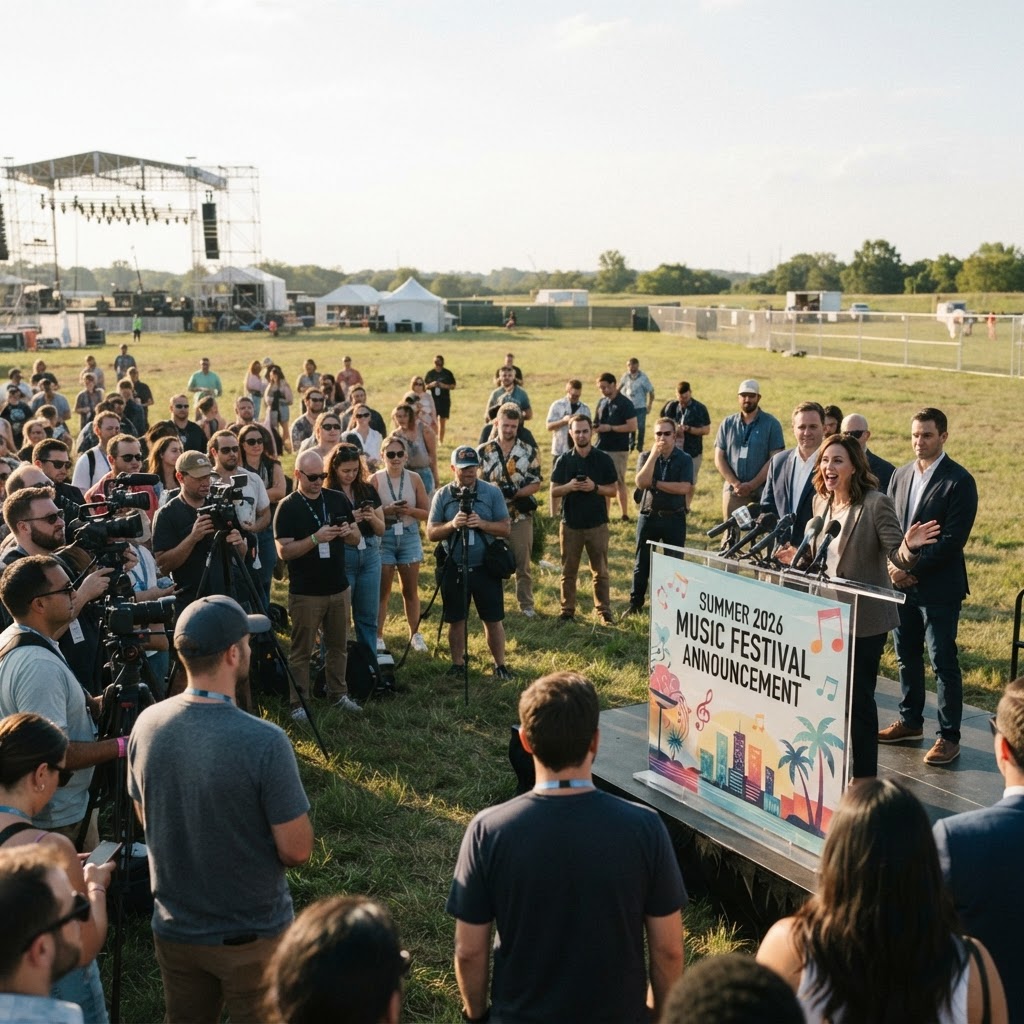
A new three-day music festival has been officially announced for summer 2026, marking what organizers hope will become a major new fixture on the international live entertainment calendar. Boasting a diverse roster of top-tier artists from around the world, the ambitious event is scheduled to take place at an expansive outdoor venue engineered to accommodate roughly 50,000 attendees per day. The announcement arrives at a pivotal moment for the global music tourism sector, which continues to evolve amid changing consumer habits, rising production overheads, and heightened demand for curated experiential gatherings.
The production consortium behind the venture, a coalition of veteran festival promoters and independent media executives, outlined a multi-genre philosophy designed to bridge generational and cultural divides. Over the course of the three-day program, the festival will stage performances spanning alternative rock, contemporary pop, electronic dance music, hip-hop, and regional global sounds, including prominent showcases for Afrobeats and Latin pop. Organizers have signaled that the inaugural lineup will feature both stadium-filling headliners and critically acclaimed breakthrough acts, aiming to capture the spirit of modern music consumption driven by algorithmically diverse streaming platforms.
The selected outdoor site, situated within a purpose-built metropolitan parkland development, provides both the natural aesthetic favored by modern festivalgoers and the structural infrastructure necessary to manage a large-scale crowd. With a strict 50,000-capacity daily limit, the organizers have emphasized crowd flow, acoustics, and environmental integration over the unconstrained land-expansion models that have characterized some of the industry’s legacy brands. State-of-the-art staging systems, multidirectional acoustic baffles to minimize off-site sound bleed, and expansive open-air green spaces will form the core blueprint of the grounds.
Advertisement

Beyond the live performances, the site layout reflects an industry-wide pivot toward premium and curated guest experiences. In addition to primary and secondary performance amphitheaters, the grounds will host interactive digital art installations, a curated culinary marketplace partnering with local restaurateurs, and dedicated wellness retreats. These secondary programming layers have increasingly become non-negotiable criteria for festival patrons, who view modern outdoor festivals as comprehensive cultural retreats rather than mere marathons of consecutive concert sets.
The decision to target summer 2026 rather than the immediate upcoming season reflects an intentional, cautious planning horizon. By adopting a two-year runway, the production team aims to insulate the event from the supply chain vulnerabilities and staffing shortages that have plagued live entertainment operations in recent seasons. Securing elite headline talent has also grown exponentially competitive, with major touring artists scheduling their world itineraries eighteen to twenty-four months in advance. The prolonged timeline affords the booking committee the leverage required to construct exclusive, festival-defining appearances that cannot be replicated elsewhere on the summer circuit.
Industry analysts point out that entering the festival market at this capacity is both a bold statement of confidence and a calculated economic gamble. While market indicators show sustained consumer appetite for high-profile live events, operational expenditures—including artist guarantees, security personnel, logistical transport, and advanced staging—have surged dramatically over the past three years. Mid-tier festivals across North America and Europe have felt the squeeze, with several long-running institutions pausing operations or shuttering permanently due to compressed profit margins and volatile advance ticket sales.
To mitigate these prevailing market pressures, the organizers have committed to a phased infrastructure rollout supported by private capital and strategic brand partnerships. Financial viability will rely on a balanced ticketing model that offers early-tier general admission access alongside heavily customized VIP packages. Modern festival economics demonstrate that higher-tier hospitality, exclusive stage-viewing platforms, and all-inclusive packages often generate the crucial margins needed to offset foundational staging costs, allowing general entry pricing to remain competitive for the broader public.
Environmental sustainability stands as another foundational pillar of the 2026 initiative. In response to mounting public scrutiny regarding the ecological footprint of mega-events, the festival has introduced a zero-landfill directive. Measures will include mandatory compostable serveware, closed-loop waste management systems, and a complete ban on single-use plastics across all vendor operations. To address scope-three emissions—often the largest environmental contributor to destination festivals—the production team is coordinating with municipal transport agencies to implement integrated public transit tickets, express shuttle networks, and dedicated park-and-ride hubs, discouraging attendees from relying on personal vehicles.
Civic and tourism leaders in the host region have warmly welcomed the initiative, anticipating substantial economic benefits. A gathering of 50,000 patrons daily over a three-day weekend is expected to inject tens of millions of dollars into regional hotels, dining establishments, and local transit networks. Negotiations are currently underway to develop workforce pipelines that will recruit event staff, technical crews, and hospitality personnel from surrounding communities, ensuring that the financial windfall resonates well beyond the perimeter of the festival grounds.
Technological integration will also play a decisive role in the operational architecture of the event. Organizers plan to deploy an advanced contactless credentialing system utilizing next-generation RFID wristbands, which will manage everything from seamless gate entry to cashless transactions across merchant zones. This integrated digital framework will also feature an adaptive mobile platform designed to alert attendees to real-time crowd densities, localized weather updates, and dynamic scheduling modifications, directly tackling the logistical bottlenecks that frequently frustrate patrons at comparable events.
As the music industry continues to recalibrate following years of volatility, the arrival of a major player for the 2026 calendar indicates sustained belief in the collective power of live sound. If executed according to its ambitious blueprint, the new festival could redefine industry benchmarks for artist curation, logistical precision, and sustainable event management. Further announcements regarding the formal roster of performers, comprehensive transport partnerships, and the initial wave of ticket sales are anticipated in the latter half of 2025.