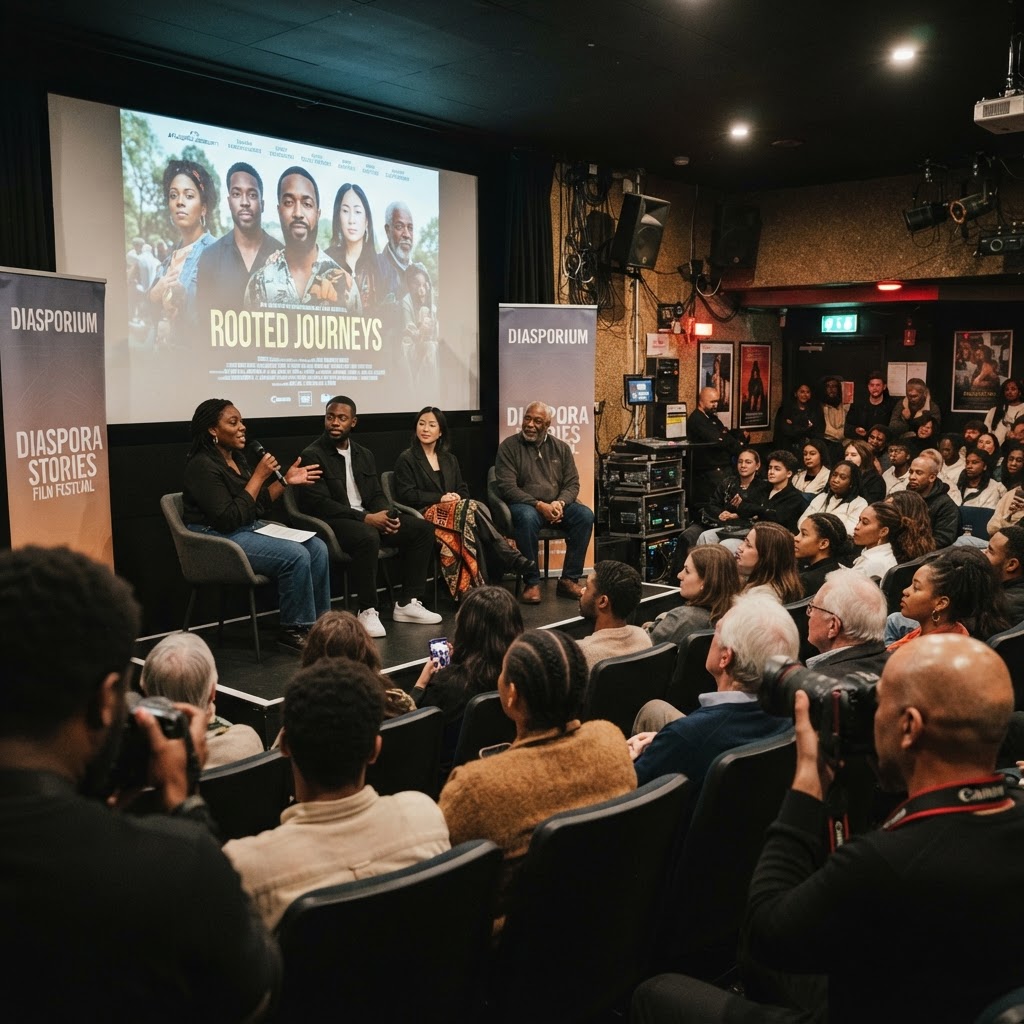
The annual independent film festival officially opened its doors this week, marking the launch of a critically anticipated cultural event that brings fifty bold, visionary productions from twenty countries to local screens. Over the course of the next seven days, the festival will serve as an international nexus for emerging filmmakers, industry veterans, and dedicated cinephiles alike, championing ambitious narratives that intentionally defy the formulas and constraints of mainstream commercial cinema. With red carpets traded for intimate question-and-answer sessions and an emphasis on raw talent over Hollywood spectacle, the city is set to transform into a buzzing hub of artistic discourse and cinematic discovery.
Established as an uncompromising launchpad for original voices, this year’s curation reflects a deliberate effort to expand the geographic, economic, and cultural scope of independent storytelling. From high-concept micro-budget thrillers crafted in East Asia to poignant social realism emerging from Eastern Europe, Latin America, and Sub-Saharan Africa, the slate represents a comprehensive cross-section of global auteur cinema. Programmers sifted through several thousand submissions over the past twelve months to assemble a lineup that prioritizes aesthetic risk-taking, personal urgency, and thematic depth over commercial viability.
The global film market has experienced tectonic shifts in recent years, largely driven by aggressive studio consolidation, declining mid-budget theatrical releases, and the overwhelming corporate prioritization of proven intellectual properties. As legacy Hollywood studios continue to funnel capital almost exclusively into franchise tentpoles, superhero universes, and algorithmic crowd-pleasers, grassroots cinematic festivals have transitioned from regional celebrations into critical cultural lifelines. Industry analysts point out that independent filmmakers face unprecedented hurdles in securing traditional distribution agreements, making festival exposure and audience engagement vital steps in establishing career longevity.
Advertisement

This festival’s specific mandate underscores that harsh commercial reality while offering an institutional antidote. By focusing squarely on directors who are releasing their first or second features, the programming committee has constructed an environment geared toward discovery rather than star-driven pageantry. Several of the chosen works were financed through non-traditional means, including municipal community arts grants, regional European co-production endowments, and grassroots digital crowdfunding campaigns, underscoring the extraordinary resilience and resourcefulness required to mount personal creative projects in an increasingly restrictive economic climate.
Among the fifty selections, clear thematic patterns have surfaced that mirror contemporary geopolitical and cultural anxieties. A prominent narrative thread this year explores the evolving tensions between human autonomy and environmental precarity, captured through documentary exposés and speculative fiction frameworks alike. Other selections focus intimately on displaced communities navigating migrant pathways, generational reconciliation within fractured households, and the complex negotiations of individual identity inside rapidly urbanizing societies. Rather than offering escapism, these films lean directly into the unresolved frictions of modern life, challenging audiences to sit with ambiguity.
The stylistic execution on display across the program is equally radical and diverse. Eschewing the hyper-polished, uniform aesthetic dictated by standardized digital cinematography, participating filmmakers have embraced tactile, varied mediums. Audiences will encounter pristine traditional 35mm film transfers, evocative 16mm grain, inventive mobile-cinematography experiments, and hybrid documentary forms that challenge objective truth through staged recreations and archival remixing. This visual variety serves as a potent reminder of cinema's expansive technical canvas when unbound by studio house styles.
The operational framework of this year’s event has also been thoughtfully scaled up to meet increased public and commercial interest. Screenings will be hosted across three historic independent cinemas throughout the city, supplemented by curated panels, networking mixers, and masterclasses held in partner arts facilities and community cultural centers. By intentionally utilizing neighborhood venues rather than centralized corporate multiplexes, the organizers aim to cultivate an intimate, communal atmosphere where casual audiences, emerging artists, and established industry professionals can engage in unmediated, direct discourse.
Crucially, the festival will feature an expanded distribution market designed to connect independent directors with acquisitions executives, digital platforms, and boutique international sales agents. While digital streaming services initially promised to democratize film access for viewers worldwide, the reality of the streaming era has introduced complex compensation structures, opaque viewership metrics, and severe discoverability challenges for non-franchise titles. The industry symposium running alongside the public screenings will address these exact market realities, offering panels on intellectual property preservation, international co-production treaties, modern digital rights licensing paradigms, and the logistics of sustainable micro-budget production.
Industry observers emphasize that platforms like this festival provide measurable economic and career outcomes. Several projects featured in previous iterations of the event went on to secure limited theatrical distribution, international broadcast licensing, and nominations during the global awards season. For the emerging filmmakers arriving in the city this week, the presence of legitimate buyers seeking distinct international voices transforms the festival from a purely celebratory showcase into a pivotal career launchpad.
Community outreach sits at the heart of the festival's institutional mission, reinforcing the belief that challenging cinema should not remain the exclusive domain of affluent festivalgoers. To ensure that the screenings remain genuinely accessible to audiences outside traditional cinephile circles, organizers have introduced subsidized ticketing tiers, free admission passes for local neighborhood organizations, and educational matinees tailored for public high school students and emerging university writers. Several visiting international directors have committed to hosting open-access workshops detailing their respective workflows, breaking down the technical realities of low-budget sound design, lean screenwriting, and grassroots production logistics for the next generation of visual storytellers.
The festival will conclude over the weekend with a formal awards ceremony overseen by an esteemed international jury composed of celebrated directors, film theorists, festival curators, and independent producers. Honors will be awarded across multiple categories, including Best Narrative Feature, Best Documentary, Breakthrough Director, and the coveted Audience Choice Award, which invites everyday attendees to vote on every screening they attend. Beyond the prestige of formal recognition, category winners will receive cash prizes, post-production grants, and professional technical support packages intended to directly accelerate the development and financing of their next creative endeavors.
As the house lights dim for the opening slate of screenings, anticipation remains remarkably high among audiences hungry for substantive, provocative, and varied cinematic fare. In a theatrical ecosystem often defined by corporate caution...