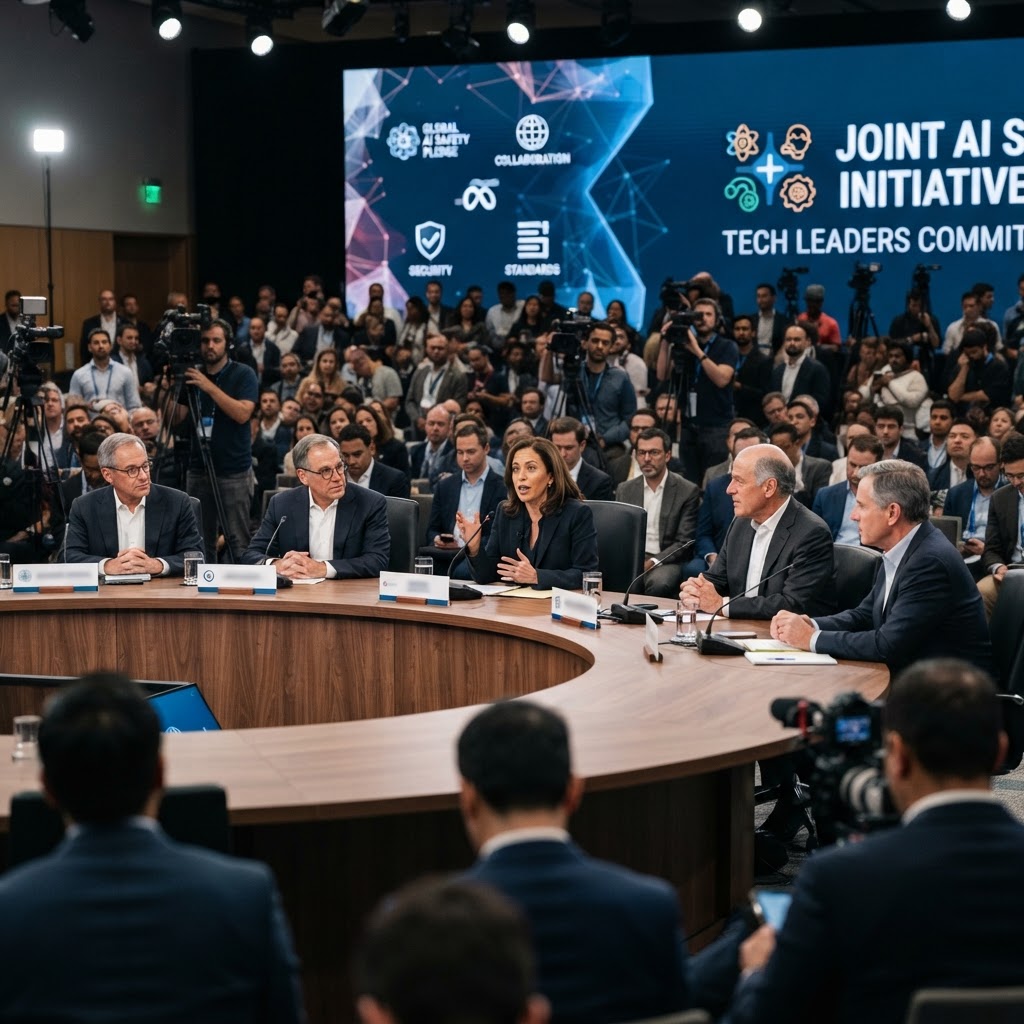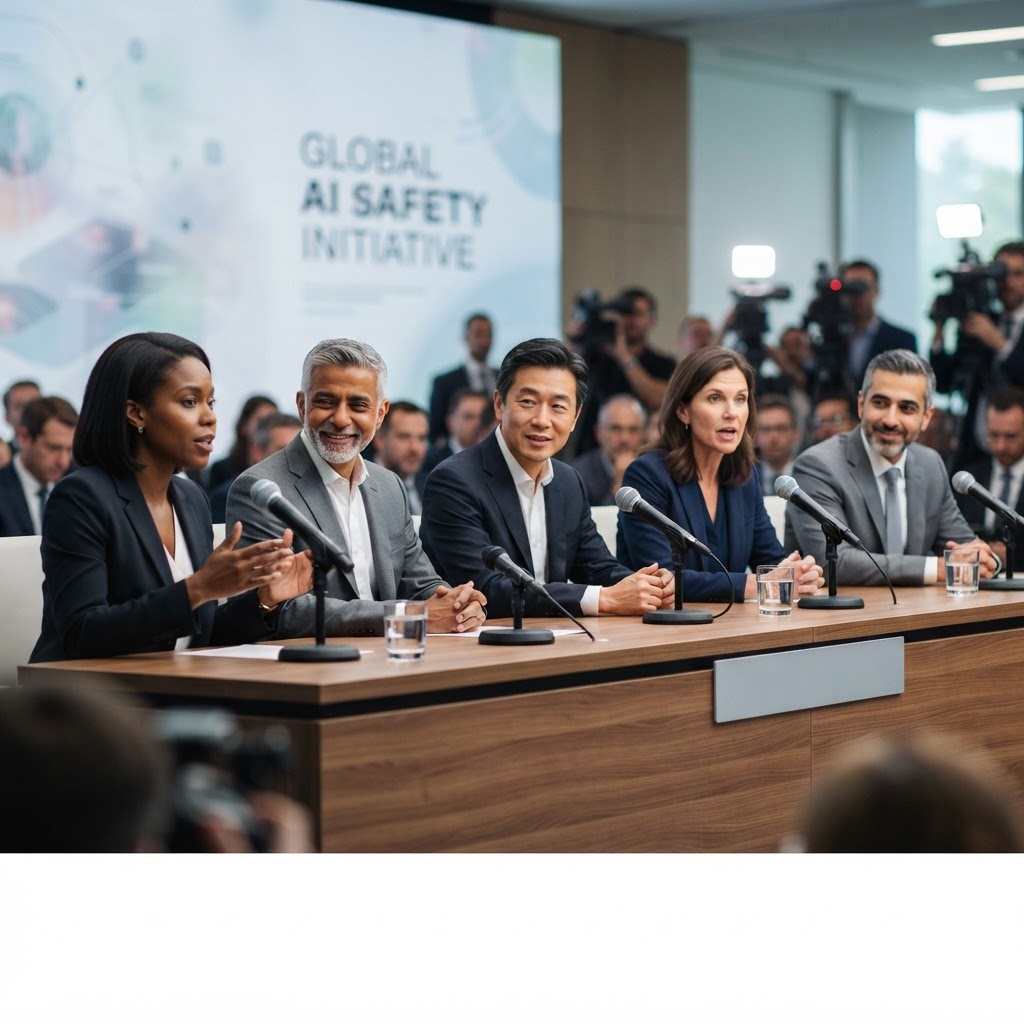
In an unprecedented display of cross-industry collaboration, the world’s leading artificial intelligence developers have formally unveiled the AI Safety Initiative, a historic framework aimed at establishing unified security protocols, preventing catastrophic risks, and standardizing safety benchmarks for next-generation frontier models. The coalition, comprising major foundational model developers, multinational cloud providers, and leading academic research hubs, represents a concerted response to intensifying global concerns over the velocity of generative technology and the lack of standardized oversight.
The landmark pact comes at a pivotal juncture for the technology sector. Over the past twenty-four months, rapid breakthroughs in multimodal systems, autonomous agentic architectures, and automated code generation have outpaced existing regulatory mechanisms. As competitive pressures intensified, critics routinely cautioned that the sprint toward commercial dominance risked marginalizing fundamental safety testing. By forming the AI Safety Initiative, participating firms are attempting to signal that while commercial competition remains fierce, existential and operational risk mitigation must be treated as a common good rather than a proprietary advantage.
Central to the initiative is the institutionalization of mandatory "red-teaming" across all models exceeding specific computational and parameter thresholds. Under the agreed guidelines, participating companies will grant vetted independent third parties structured access to their most capable foundational models prior to broad public release. These external teams will conduct rigorous stress-testing designed to probe for systemic vulnerabilities, including the potential for models to assist in the synthesis of chemical or biological compounds, execute unauthorized cyberattacks, or propagate high-frequency automated disinformation campaigns at scale.
Advertisement

Beyond external auditing, the framework creates a centralized, cryptographically secured threat-intelligence exchange. Modeled after successful information-sharing consortia in civil aviation and financial services, this hub will allow engineers across rival institutions to share early-warning signals regarding model alignment failures, autonomous agent drift, and novel exploit vectors. If an engineering team at one organization discovers a systemic jailbreak or an unintended emergent behavior in an advanced architecture, that vulnerability profile will be shared instantaneously across the network, enabling all members to reinforce their defensive guardrails simultaneously.
The economic stakes of these commitments are immense. Industry analysts estimate that the capital expenditures tied to compute, hardware infrastructure, and specialized talent for developing frontier AI systems now run into the tens of billions of dollars annually. Introducing mandatory pre-deployment auditing and rigorous safety milestones will inevitably alter development pipelines, potentially extending launch cycles and raising the cost of deployment. However, coalition leaders argue that the economic fallout from a catastrophic failure—such as a critical infrastructure disruption caused by an unchecked autonomous agent—would far exceed the costs of preventative compliance.
Government leaders and multilateral bodies have offered cautious praise for the measure, though policymakers maintain that private commitments cannot serve as a substitute for sovereign law. In Washington, lawmakers noted that while voluntary consortia are a constructive step, statutory requirements with binding financial penalties remain necessary to ensure compliance across the broader technology ecosystem. Across the Atlantic, European regulators emphasized that the initiative’s protocols must seamlessly integrate with the compliance mandates laid out in comprehensive regional AI legislation, specifically regarding high-risk categories and copyright transparency.
Academic institutions and civil society groups have voiced nuanced perspectives on the announcement. AI ethics researchers have highlighted that previous voluntary industry commitments frequently suffered from a lack of transparency and an absence of formal enforcement mechanisms. Critics have noted that while preventing catastrophic biological or cyber risks is paramount, frontier safety frameworks must not ignore the immediate harms already manifesting today, including algorithmic bias in hiring, deepfake-driven political manipulation, and structural labor displacement.
To address doubts regarding accountability, the initiative has pledged to establish an independent oversight board composed of non-affiliated computer scientists, bio-security experts, and human rights advocates. This governing council will be tasked with publishing bi-annual transparency reports that evaluate member adherence to safety benchmarks and review the resolution of disclosed vulnerabilities. The charter also includes explicit whistle-blower protections, ensuring that internal safety researchers can elevate critical technical alarms to the oversight board without fear of legal reprisal or corporate retaliation.
The challenge of global synchronization also looms large over the enterprise. While Western tech giants have consolidated their safety criteria, foundational model research is advancing rapidly across Asia and the global south. Technologists warn that without inclusive, international consensus that extends to emerging sovereign platforms worldwide, standardized safety thresholds risk creating uneven global adoption, where strict safety requirements in one jurisdiction simply shift capital and talent toward less regulated environments.
Nevertheless, market response to the initiative has remained broadly constructive. Major enterprise customers, who have increasingly expressed anxiety regarding liability, intellectual property integrity, and unpredictable autonomous agent behaviors, view the framework as an essential step toward standardizing commercial procurement. By providing clear safety certifications and standardized auditing procedures, the initiative may lower the barrier to adoption for highly regulated industries such as healthcare, civil defense, and international finance.
The long-term success of the AI Safety Initiative will ultimately depend on whether its members maintain their collective resolve when market incentives run counter to precautionary principles. In an industry defined by winner-take-all dynamics and exponential capability curves, the temptation to rush a transformative deployment to capture market share will inevitably test the integrity of these voluntary guardrails.
For now, the unveiling of the consortium marks a critical admission by the architects of the technology: that the capabilities of frontier artificial intelligence are rapidly outgrowing the traditional paradigms of corporate self-regulation. As modern software systems transition from passive, deterministic tools into semi-autonomous, highly adaptive agents, the line between product quality assurance and public safety has dissolved. By choosing to build shared defensive infrastructure today, the tech sector is betting that coordinated scientific rigor will be enough to navigate the vast, uncharted transformations that lie ahead.