AI Revolution: The Future of Technology
AI Revolution: The Future of Technology - DIASPORIUM video coverage.
AI Breakthrough Achieved in Medical Research
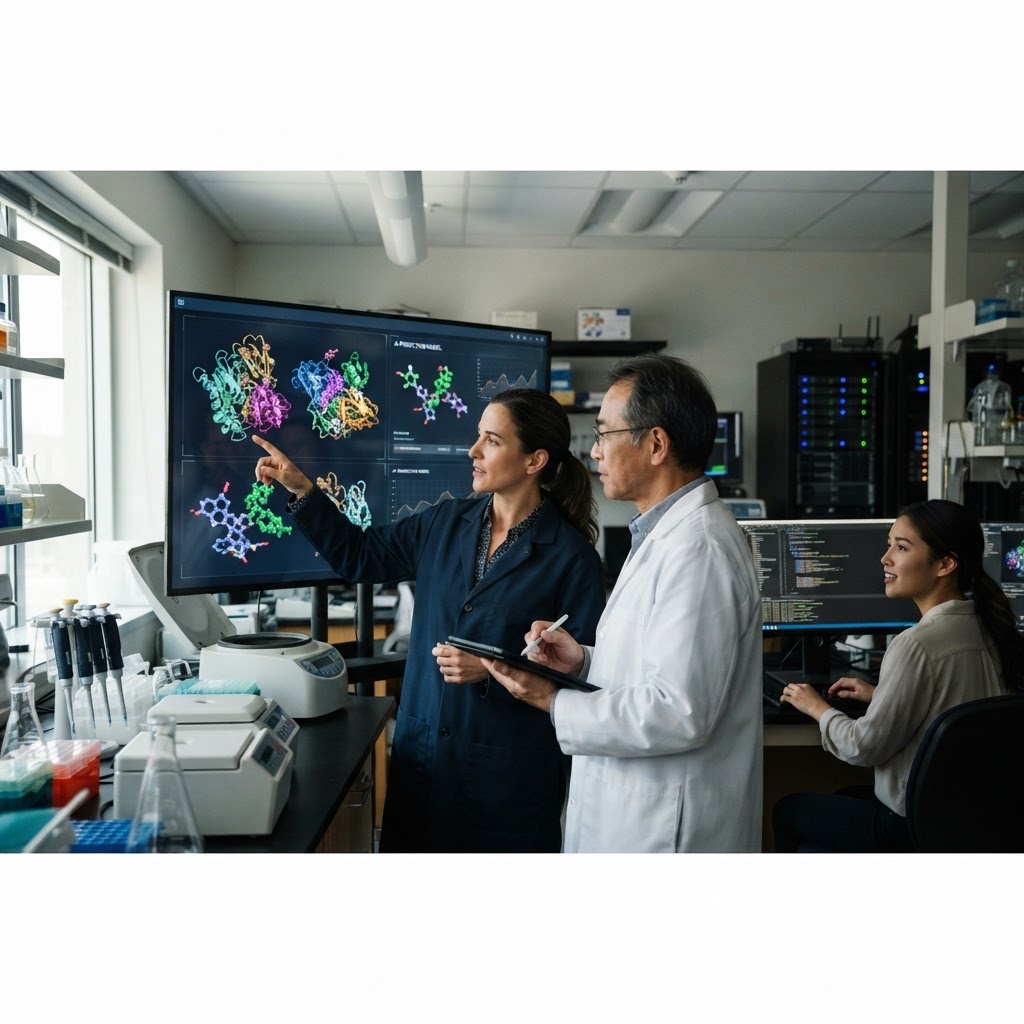
Introduction and Overview
The global scientific and clinical community stands at the precipice of a transformative epoch as artificial intelligence achieves historic milestones across foundational medical research, diagnostic precision, and therapeutic discovery. In laboratories and academic medical centers around the world, advanced machine learning architectures and multimodal foundation models have transitioned from experimental novelties into core drivers of clinical breakthroughs. From mapping intricate neural synaptic wiring to uncovering previously invisible molecular triggers of neurodegenerative decline, these computational platforms are fundamentally altering our understanding of human pathology. The speed, accuracy, and depth of these computational discoveries mark a monumental inflection point in human biology.
For decades, medical translation has suffered from notoriously lengthy discovery timelines, high attrition rates in experimental drug pipelines, and persistent diagnostic bottlenecks that cost millions of lives each year. Traditional clinical trial design and biological modeling relied heavily on painstaking manual experimentation and iterative laboratory validation, taking decades and billions of dollars to bring a single novel therapy from the bench to the bedside. Today, sophisticated foundation models trained on petabytes of genomic sequences, proteomic structural datasets, clinical literature, and high-resolution physiological imaging are compressing decades of labor into matter of weeks. As computational platforms ingest multidimensional biomedical data, they identify complex causal associations and subtle diagnostic signatures that previously evaded even the most seasoned human specialists.
The significance of this paradigm shift extends far beyond institutional laboratory accolades or incremental publication metrics; it directly addresses systemic vulnerabilities in contemporary healthcare delivery. Across developing and developed nations alike, healthcare systems are buckling under acute physician shortages, escalating costs, and an expanding prevalence of chronic disease. By radically enhancing diagnostic sensitivity, accelerating the generation of bespoke pharmacological agents, and optimizing individual therapeutic regimens, artificial intelligence is transforming clinical care from reactive disease management into proactive, predictive intervention. The ripple effects of this technological evolution are poised to democratize access to world-class clinical expertise, dismantling geographic barriers that have historically separated leading academic research centers from underserved clinics.
Advertisement

Yet, the rapid deployment of autonomous algorithms across sensitive biomedical spaces inevitably brings urgent challenges that require rigorous oversight. As machine learning models interface with complex human biologies, critical questions regarding algorithmic opacity, statistical bias, synthetic hallucinations, data integrity, and cross-border regulatory compliance demand proactive engagement from clinicians, software architects, and policymakers. This extended DIASPORIUM investigative report provides comprehensive analysis into the scientific, structural, and humanitarian implications of this technological leap. It evaluates the empirical developments powering this medical renaissance, unpacks expert debates, explores the distinct voice and contributions of global diaspora scientific communities, and outlines the imperative road ahead.
Background and Context
To contextualize the magnitude of modern medical artificial intelligence, one must examine the long trajectory of computational biology and automated clinical diagnostic systems over the last half-century. Early explorations into computer-assisted medicine during the 1970s and 1980s centered primarily on deterministic rule-based systems, such as MYCIN, which attempted to encode human clinical expertise through explicit, hard-coded logic trees. While these early iterations offered proof-of-concept utility in identifying infectious blood diseases, they lacked scalability, could not handle biological ambiguity, and proved brittle when confronted with contradictory clinical presentations. For decades, the sheer complexity of cellular biochemistry and human physiology remained far too intricate to capture through hand-crafted computer code.
The arrival of modern deep learning and distributed graphics processing units in the 2010s sparked a profound revolution across biomedical imaging and bioinformatics. Convolutional neural networks began matching or exceeding board-certified pathologists and radiologists in specific pattern-recognition benchmarks, such as classifying benign versus malignant melanoma or detecting diabetic retinopathy from retinal fundus photographs. However, these specialized networks operated as isolated point-solutions, confined strictly to narrow, single-modality tasks without contextual awareness of wider systemic health. They could flag a suspicious pulmonary lesion on a thoracic CT scan, yet remained completely blind to the patient’s clinical history, genetic mutations, laboratory chemistry, or downstream drug tolerability.
The decisive technological leap occurred with the emergence of self-attention mechanisms, transformer architectures, and multimodal foundation models. Rather than learning narrow classification thresholds, modern biomedical foundation models absorb hundreds of billions of tokens spanning scientific literature, molecular configurations, electronic health records, transcriptomic profiles, and multidimensional imaging slices. Initiatives such as the Stanford Medicine annual scientific reviews have documented how deep learning models moved from basic diagnostic assistance into generative hypothesis formation and real-time biomedical discovery. Researchers suddenly possessed systems capable of reasoning across disparate biological domains, deducing functional pathways, and synthesizing predictive models of unprecedented complexity.
Concurrently, the biopharmaceutical sector experienced unprecedented structural stagnation, often encapsulated by the inverse-Moore's law known as Eroom’s Law, which observed that the cost of developing a new drug doubled roughly every nine years despite advances in technology. Standard pharmaceutical screening required screening vast physical libraries consisting of millions of chemical compounds, resulting in staggering failure rates during early-phase pharmacokinetic trials. The fusion of structural biology with generative AI, epitomized by breakthroughs in de novo protein design and automated molecular docking, disrupted this downward productivity spiral. By simulating intermolecular dynamics in silico with atomic precision, computational biologists gained the capability to predict protein folding, ligand affinity, and compound toxicity before committing a single physical pipette to a test tube.
Key Developments
Recent months have yielded an unprecedented concentration of scientific breakthroughs that validate the transformative utility of advanced artificial intelligence across human health. Research hubs spanning Stanford University, UC San Diego, Microsoft Research, and Harvard University have unveiled pioneering clinical platforms that conquer biological challenges once considered computationally intractable. Among these breakthroughs is the creation of specialized deep-learning radiation oncology engines that automate and optimize the design of radiotherapy beams for complex breast cancers. By calculating precise particle delivery trajectories, these models significantly decrease accidental radiation dosage to adjacent vital organs like the heart and lungs, eliminating human contouring errors and reducing planning turnaround times from multiple days to mere minutes.
Simultaneously, biomedical researchers have harnessed artificial intelligence to unravel long-standing mysteries surrounding neurodegenerative disorders like Alzheimer’s disease. Machine learning architectures deployed at leading medical institutes have successfully isolated previously undetected cellular triggers and metabolic cascades, tracing how subtle microglial inflammation and aberrant protein folding initiate cognitive decline years before clinical symptoms manifest. In adjacent structural neuroscience endeavors, monumental public-private partnerships have mapped human brain microstructures at unprecedented nanoscale resolution. By processing petabytes of electron microscopy data via automated convolutional pipelines, researchers revealed millions of previously unmapped synaptic junctions, transforming our fundamental comprehension of cerebral circuitry and laying bare new targets for neuropsychiatric interventions.
The realm of clinical imaging and point-of-care diagnostics has experienced an equally dramatic expansion through the development of specialized vision foundation models like RAD-DINO, created through partnerships between Microsoft Research and top clinical institutions. Unlike historical diagnostic algorithms trained on narrow disease phenotypes, these self-supervised vision models process massive arrays of multi-slice imaging data across diverse anatomical modalities. They deliver instantaneous second-readings to attending radiologists, cross-referencing imaging anomalies against millions of global diagnostic cases to identify early-stage oncological malignancies, vascular occlusions, and subtle musculoskeletal trauma before they become life-threatening.
A closer look at these integrated diagnostic and discovery platforms highlights several technical capabilities that distinguish this wave of AI breakthroughs from prior technological iterations:
- De Novo Molecular Generation and Structural Docking: Generative models autonomously synthesize novel chemical scaffolds targeted to complex, previously undruggable pathogenic receptors, cutting pre-clinical lead optimization cycles from several years to a matter of months.
- Multimodal Clinical Record Synthesis: Algorithmic engines ingest disparate electronic health records, continuous physiological monitoring data, and patient pathology slides simultaneously, predicting adverse clinical deterioration events hours before clinical decompensation occurs.
- High-Resolution Anatomic and Synaptic Mapping: Automated computer vision systems construct complete three-dimensional nanometer-scale digital maps of human tissues, pinpointing aberrant neurovascular and synaptic variations that inform targeted neurosurgery.
- Adaptive Radiotherapeutic Planning: Deep-learning planning software calculates individualized radiation contours that respond dynamically to patient respiratory movement, preserving healthy cardiopulmonary structures during oncological radiation treatments.
Beyond the hospital ward and the structural biology laboratory, AI is making dramatic inroads into wearable and point-of-care medical hardware. Engineers at UC San Diego have demonstrated breakthrough skin-adherent, wireless ultrasound patches embedded with edge-computing AI processors. These devices monitor deep-tissue vascular dynamics and musculoskeletal fiber contractions continuously, translating raw bio-acoustic signals in real time to operate external neuroprosthetic limbs and issue instantaneous warnings regarding imminent vascular thrombosis. This convergence of flexible bio-integrated electronics and real-time algorithmic processing marks the dawn of an era wherein medical research discoveries translate into continuous ambulatory therapy.
Expert Analysis and Perspectives
The rapid integration of sophisticated computational models into high-stakes clinical domains has sparked an energetic dialogue among leading physician-scientists, ethicists, and institutional leaders. Across academic medical departments, experts emphasize that while the diagnostic sensitivity and generative capacity of these systems are revolutionary, they must be situated as cognitive amplifiers rather than autonomous replacements for clinical judgment. Medical decisions inherently involve compassionate human communication, individualized risk tolerance, and nuanced bedside observations that synthetic models cannot replicate. Scholars caution against uncritical technophilia, stressing the foundational importance of algorithmic interpretability and comprehensive clinical trial validation.
In analyzing how modern language models and multimodal diagnostic engines interface with clinical practice, academic leaders note that the raw computational leap represents a radical departure from traditional medical paradigms. Reflecting on the cognitive abilities of large language models tasked with solving baffling clinical diagnostic mysteries, Isaac Kohane, chairman of Harvard Medical School’s Department of Biomedical Informatics, emphasized the historic leap this technology represents:
"This large language model was not trained to be a doctor; it’s just trained to predict the next word. It could speak as coherently about wine pairings with a vegetarian menu as diagnose a complex patient. It was truly a quantum leap from anything that anybody in computer science who was honest with themselves would have predicted in the next 10 years."
This astonishing generalizability has provoked rigorous debate over the optimal pedagogical approaches needed to educate the upcoming generation of clinicians. If foundation models can synthesize vast diagnostic possibilities in milliseconds, medical curricula must evolve beyond rote memorization of clinical facts to emphasize critical reasoning, probabilistic decision analysis, and ethical oversight. Medical educators point out that the fundamental mandate of academic institutions is shifting rapidly toward cultivating agility and technological fluency, ensuring clinicians understand the operational limits and hidden failure modes of predictive systems.
The democratization of rapid clinical insights also carries profound implications for the patient-physician compact. Clinicians routinely struggle with crushing administrative paperwork and time-constrained consultations, which diminish empathetic listening and exhaust clinical staff. Bernard Chang, an associate dean and clinician at Harvard, highlighted how medical artificial intelligence holds the latent power to restore human connection to medicine:
"What most excites me about AI’s promise in medicine is that these technological tools will allow physicians to spend more time on the human aspects of the profession, which is sorely needed, while facilitating the ability to access information quickly, analyze large amounts of important data, and make the difficult connections necessary to consider the rare diagnoses, the less obvious treatment paradigms, and ultimately the optimal care for patients."
However, alongside this immense optimism lies profound concern regarding deep-seated statistical biases that threaten to undermine healthcare equity. Artificial intelligence models inevitably reflect the historical datasets upon which they are trained; when those training sets disproportionately represent affluent, historically over-studied patient cohorts, the resulting models can produce hazardous inaccuracies when deployed in underrepresented populations. Medical informaticians emphasize that uncurated clinical data contains systemic social inequities that machine learning systems can accidentally normalize and amplify under the guise of computational neutrality.
Addressing this insidious threat, clinician-researcher Adam Rodman pointed to the critical imperative to move past simple algorithmic enthusiasm to address root systemic disparities:
"I think we’re in this weird space. We say, ‘Wow, the technology is really powerful.’ But what do we do with it to actually change things? The latest AI has the potential to remake healthcare top to bottom, but only if given a chance. The wrong priorities — too much deference to entrenched interests, a focus on money instead of health — could easily reduce the AI 'revolution' to an underwhelming exercise in tinkering around the edges."
Impact and Implications
The societal and structural ramifications of this medical AI revolution extend across every layer of the global healthcare ecosystem. For health systems, the automation of complex diagnostic screening, clinical documentation, and adaptive treatment scheduling promises to drastically mitigate systemic administrative waste, which currently consumes hundreds of billions of dollars annually. When routine radiological screening, initial pathology evaluations, and pharmacovigilance logging are assisted by continuous machine intelligence, hospital operating costs decline while diagnostic turnaround times plummet. This efficiency directly addresses the acute burnout crisis facing clinicians worldwide, restoring bandwidth to overwhelmed emergency departments and primary care networks.
In the biopharmaceutical sector, the economic and operational implications are profoundly disruptive. Traditional pharmaceutical research pipelines, characterized by a decade of empirical trial-and-error and billions of dollars in development capital per successful molecule, are giving way to streamlined computational pipelines. Startups and pharmaceutical conglomerates alike are operating synthetic design cycles where machine learning systems generate and test millions of prospective drug candidates in virtual molecular environments. This efficiency drastically reduces early-stage pipeline attrition, enabling the economic exploration of novel therapeutics for rare, neglected diseases that were historically neglected due to commercial unviability.
Moreover, the clinical implications for individual patient outcomes are nothing short of monumental. By identifying elusive biomarkers and synthesizing personal physiological variations, computational tools enable true precision medicine, discarding the blunt "one-size-fits-all" therapeutic approaches of the past. Oncologists can tailor chemotherapy and immunotherapeutic protocols to the precise genetic and transcriptomic mutations of an individual tumor, simultaneously adjusting radiation regimens to the patient's unique cardiopulmonary anatomy. Chronic ailments like diabetes, cardiovascular disease, and hypertension can be continuously managed via bio-integrated sensors that preemptively predict acute exacerbation events days before hospitalization becomes necessary.
To fully grasp the wide-ranging systemic shifts underway, key cross-sector impacts can be categorized across four foundational pillars:
Was this article helpful?
Support David Okafor
Enjoyed this article? Send a tip to show your appreciation.
React to this story
Get our top stories in your inbox
Join thousands of readers — daily updates, no spam.
Comments
Comments (0)
Be the first to comment.